How to Authenticate a Gucci Blondie Bag: 9 Checks

How to Authenticate a Gucci Blondie Bag: 9 Checks (2026)
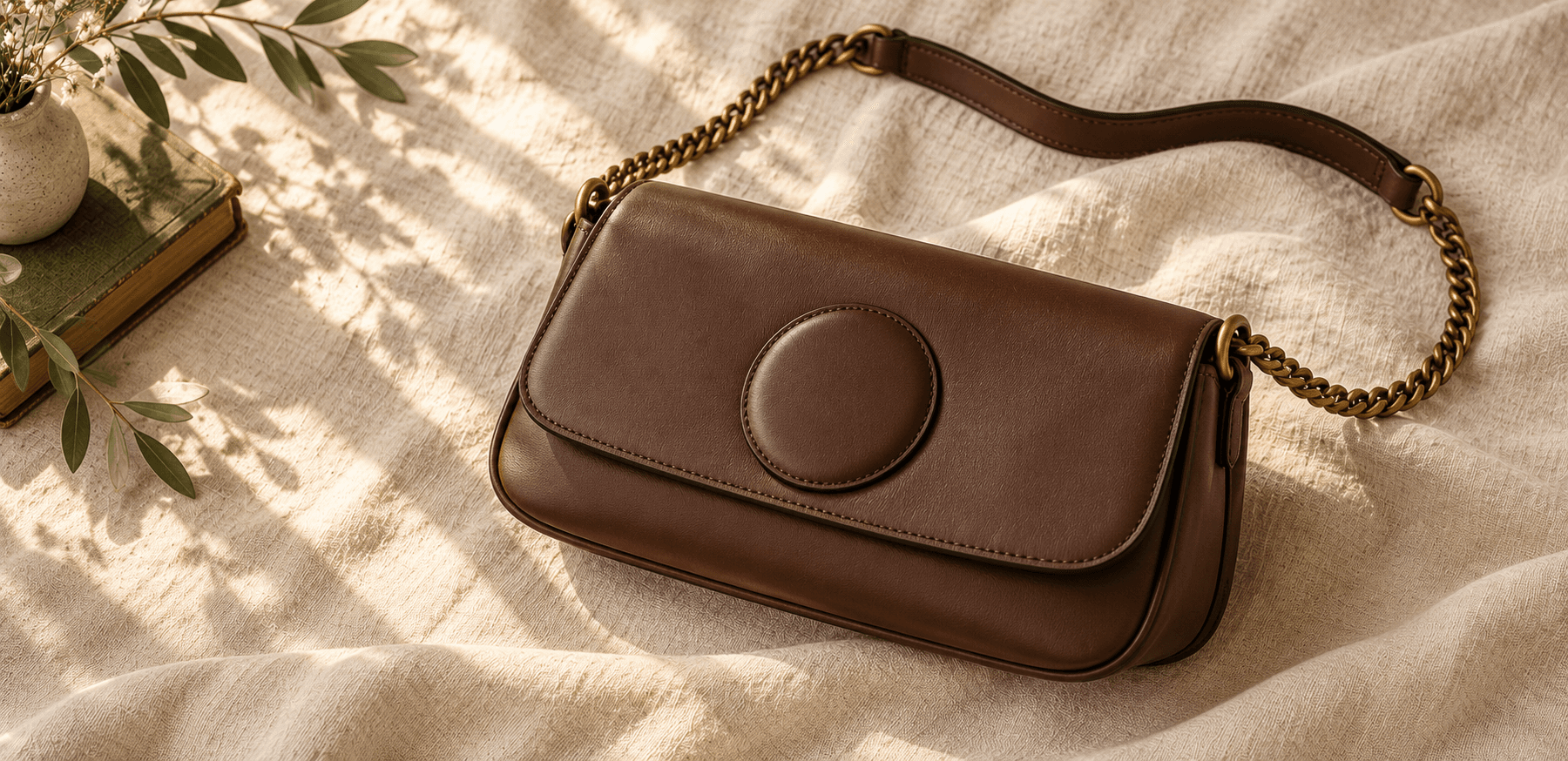
The Gucci Blondie rewards being read as a soft flap bag before it is read as a logo: a supple shoulder bag that closes with a flap and a magnet, carries on a sliding chain or a short top handle, and announces itself with one rounded emblem. That device is far older than the bag now carrying it. House and editorial histories place the round Interlocking G — two Gs, one inverted and overlapping the other to form a circle — in Gucci collections of the early 1970s, most precisely dated to 1971; the modern Blondie was revived under Sabato De Sarno with Cruise 2025, presented in London in May 2024. That double life matters: a 1970s Blondie and a 2024 Blondie share an emblem and a name, but not a lining, tag or hardware plan, and judging either by the other's specification produces confident mistakes. This guide authenticates the modern revival — sold since 2024 as Mini, Small and Medium shoulder bags and as Small, Medium and Large top-handle bags — and flags where a vintage original must be judged differently rather than failed. Work the nine checks in order, against the exact architecture, size and material named in the listing, and let them vote together; a seller's size word alone is the least reliable fact in any Blondie listing (Check 1). This guide sits in our wider authentication library: Balenciaga City, Balenciaga Hourglass, Balenciaga Le Cagole, Bottega Veneta Andiamo, Bottega Veneta Cassette, Bottega Veneta Gemelli Bag, Bottega Veneta Hop Bag, Bottega Veneta Jodie, Bottega Veneta Pouch, Bottega Veneta Sardine Bag, Cartier Love Bracelet, Celine 16 Bag, Celine Belt Bag, Celine Luggage, Celine Triomphe, Chanel 19, Chanel 2 55 Reissue, Chanel Boy Bag, Chanel Classic Flap, Chanel Coco Handle, Chanel Gabrielle, Chanel Wallet On Chain, Dior 30 Montaigne, Dior Bobby, Dior Book Tote, Dior Caro, Dior Lady Dior, Dior Saddle Bag, Fendi Baguette, Fendi First Bag, Fendi Peekaboo, Fendi Sunshine Shopper, Givenchy Antigona, Goyard Saint Louis, Gucci Bamboo 1947, Gucci Blondie Bag, Gucci Dionysus, Gucci Horsebit 1955, Gucci Jackie 1961, Gucci Marmont, Gucci Ophidia, Hermes Birkin, Hermes Bolide, Hermes Constance, Hermes Evelyne, Hermes Garden Party, Hermes Kelly, Hermes Lindy, Hermes Picotin Lock, Jacquemus Le Bambino, Jacquemus Le Chiquito, Loewe Basket Bag, Loewe Flamenco, Loewe Gate Bag, Loewe Hammock Bag, Loewe Puzzle Bag, Louis Vuitton Alma, Louis Vuitton Capucines, Louis Vuitton Keepall, Louis Vuitton Multi Pochette, Louis Vuitton Neverfull, Louis Vuitton Onthego, Louis Vuitton Pochette Metis, Louis Vuitton Speedy, Louis Vuitton Twist Bag, Miu Miu Wander Bag, Prada Cleo, Prada Galleria, Prada Re Edition 2005, Saint Laurent Kate, Saint Laurent Le 5 A 7, Saint Laurent Lou Camera Bag, Saint Laurent Loulou, Saint Laurent Manhattan, Saint Laurent Sac de Jour.
Quick note: no single check proves a bag is real. Weigh all nine together, and always against the exact architecture, size, material and carry format the bag claims to be.
Short answer
A genuine modern Blondie belongs to Gucci's post-2024 revival of a 1970s name: a soft flap bag since Cruise 2025, built around a rounded Interlocking G, magnetic flap, back open pocket and gold-tone metalware. Expect the named architecture — chain shoulder bag or top-handle bag with detachable strap — in calfskin, patent, suede, GG Supreme canvas or woven raffia-effect fabric, over a cotton-linen-lined interior whose pockets change with the version. Retail sources place the flat chain bags near 21.5 by 11 by 8 cm (smallest step) and 29.5 by 12.5 by 7 cm (larger flat step), and top-handle bags near 26.5 by 16.5 by 8.5 cm — all approximate, because sellers swap Mini, Small and Medium labels between the same steps. No public serial lookup exists; the two-row numeric record on the interior tag must agree with the bag, and price is never a check.
1. Model, Generation and Size Class
Fix which Blondie the bag claims to be first, because the name covers two generations and, inside the modern one, two architectures that sellers routinely list under one another's titles. Editorial and campaign histories agree the round G entered Gucci in the early 1970s — most precisely 1971, in suede-favouring collections — while the modern line is De Sarno's revival, shown with Cruise 2025 in May 2024 and reported as a May 2024 launch. A modern Blondie therefore needs a post-2024 story (current lining, hardware and tag plans; an 815-family reference where quoted); a 1970s original needs period materials and markings judged on their own terms, neither failed for lacking a modern tag nor passed as modern on an old emblem. Name the generation before measuring anything.
Then fix the architecture. The modern family divides into flat chain shoulder bags (sliding convertible chain, or fixed chain on the smallest versions) and top-handle bags (short leather top handle plus detachable, adjustable shoulder strap, with an additional Web strap on some versions). Read sizes in centimetres, not labels: smallest flat step near 21.5 by 11 by 8 cm; mid flat and small top-handle step near 26.5 by 16.5 by 8.5 cm; larger flat step near 29.5 by 12.5 by 7 cm; larger top-handle readings beyond — around 29 by 22 by 7 cm for a GG Supreme medium top-handle, larger still for maxi variants. All figures are approximate: flap bags are measured closed or relaxed, depth collapses empty, and soft leather eases.
Say the label problem plainly, because it is the single most common false alarm on this model. The same roughly 21.5 cm step appears in listings as both a Mini and a Small; the roughly 26.5 cm step appears as both a Small and a Medium; and the word Medium covers both a flat 29.5 cm chain bag and a taller 26.5 cm top-handle bag that share almost no volume. None of that makes any of those listings fake. It means the size word is a marketing label that travels between boutiques, regions and resale platforms, while the centimetre triplet and the style reference stay with the bag. Anchor on those instead: measure the empty, closed bag across its widest point, its closed height and its base depth, compare the triplet with the ladder for the named architecture, and treat a style reference in the 815711, 815714 or 815715 families — where a seller quotes one — as a cross-check to be matched against Gucci's own listing for that reference, not as a verdict on its own. A centimetre never decides this check; a bag sold as a large top-handle tote that measures as a flat mini in all three dimensions has a naming problem to resolve first.
Close with material: smooth or lightly grained calfskin and patent at the core; suede reviving the 1970s preference; GG Supreme in coated canvas with leather trim; woven raffia-effect fabric with leather trim; plus house-listed precious-skin shoulder versions. Judge each bag by its named story (Checks 4 and 6), not by the leather version's specification.
2. Flap Silhouette and Magnetic Closure Architecture
Read the architecture before touching the material, because the Blondie's identity is behavioural: it lives in how a soft flap body meets a magnetic closure. Set the bag down empty on a flat surface and look at the shape as a single decision. The genuine design presents a softly structured flap bag — a body that holds a clean rectangular reading without standing like a box, a front flap that covers the upper face and meets the body without a frame, zip or turnlock closing the main compartment in the core plan, and an open pocket on the back panel. House and retail specifications return to the same vocabulary for a reason: flap with magnetic closure, back open pocket, a bag made to be opened with one hand. Copies announce themselves here with a body so stiff it holds a rigid box shape the named soft version never carried, sides that balloon or collapse unevenly, or a substitute closure — a full zip top, a snap frame or a decorative lock — doing the work the magnet is supposed to do.
Work the closure repeatedly: the flap should seat positively, sit flush without a lifted corner, and hold against a gentle tug. A magnet that hunts, bites at one edge or lets a laden flap creep open describes mis-set alignment. Usable interior volume must agree with Check 1 — long wallet flat in the larger flat bags; phone and small wallet in the smallest step. Padding-choked interiors describe a copied outline. The back pocket must be a genuine, finished open pocket, not a stitched-shut slit.
Judge proportion too: the flap stays level, the emblem centred (Check 3), the body softening slightly toward the base without twisting, corners mirrored, and the silhouette holding when the chain is shortened and the bag is hand-carried. A correct emblem on a bag whose flap will not seat rescues nothing.
3. Round Interlocking G Emblem: Enamel and Leather Forms
Find the emblem where this design puts it: the rounded Interlocking G — two Gs, one inverted and overlapping the other to form a circle — centred on the front flap. Campaign and retail descriptions issue it in two forms descending from 1970s Gucci jewellery techniques: enamel within a gold-tone surround (named by the house as an enamel Round Interlocking G), and a leather appliqué on top-handle versions. Test only the issued form. Enamel sits evenly with a smooth, continuous surface and no bubbling, chipping or bleed past the metal line; the appliqué sits flush, cleanly finished around the full circle, without lifted edges, glue show or puckering. Colour reads as depth, never as a flat print or sticker.
Score only the issued form — enamel on most smooth-leather, patent and suede shoulder bags; leather appliqué on the top-handle family — because importing one form's test fails genuine bags of the other. Across all versions require a square, centred device, a true circle, legible evenly overlapped Gs, and scale fitted to the flap. Off-centre, oval or fused devices are disagreements to resolve first.
Where the device carries a metal surround, it shares the bag's gold-tone family (Check 9): even polish, no casting seams or pitting, matched to the chain and fittings. The emblem is the most photographed — and most imitated — square inch of this bag; let it corroborate, not carry, the verdict.
4. Material Families: Calfskin, Patent, Suede, GG Supreme and Woven
Handle the material the version claims, because on this model the material naming itself is a signature and copies most often get the naming wrong. Start by identifying what the version claims, since the Blondie does not have one universal face. The core shoulder bag is calfskin — listed by retailers as 100 percent calfskin in smooth and lightly grained forms, including the Tuscan calfskin the house favours for this line — with patent-leather versions in the same palette, suede versions that deliberately revive the 1970s bags' favourite material, GG Supreme versions in beige and ebony coated canvas with leather trim, and woven versions in a raffia-effect fabric with leather trim; the lining follows the exterior story (Check 6), so fix the exterior first. A bag sold as smooth calfskin that presents a coated, plasticky face with a uniformly stamped grain, or a GG Supreme version whose monogram is printed onto flat fabric rather than carried in a coated canvas with depth and regularity, has a version disagreement to resolve before quality is even scored.
Score with the hand test. Calfskin moves as one supple surface, settling in carry while staying dry and fine; patent flexes without cracking or creasing white; suede shows an even fingertip-moving nap without bald patches. Canvas feels substantial, its monogram crisp and continuous around the fold and into the trim without a broken repeat; woven fabric is tight and even, without unravelling ends. Smaller sizes must share that hand at smaller scale.
Smell and age honestly: clean leather smell on calfskin and suede; a sharp chemical note is a finding. Wear should agree with the claimed life — softening at the fold and corners, light marks on smooth leather, nap settling on suede — never cracking through, peeling or colour lifting in sheets, which describe coating failure. Light scratching on carried smooth leather is consistent with the material; demand honest evenness, not plastic uniformity.
5. Chains, Top Handles, Straps and Carry Logic
Work the carry against the architecture fixed in Check 1, because the Blondie does not have one universal strap story and importing the wrong one misjudges genuine bags. The chain shoulder bags carry on chain: in the sliding-chain versions the chain doubles to convert between a longer shoulder drop — retail specifications put it near 48 cm — and a shorter top-handle drop near 29 cm, while the smallest chain versions carry a fixed chain drop near 51 cm. The top-handle bags carry first on a short leather top handle with a drop of only a few centimetres, then on a detachable, adjustable shoulder strap whose drop retail specifications place roughly between 47 and 56 cm depending on version, with some GG Supreme top-handle versions adding a second, Web-stripe strap alongside the leather one. Fix which architecture the named version owns, then score only that architecture's carry. A flat chain bag sold with a top-handle bag's studded handle, or a top-handle bag missing the strap its specification supplies, has a naming or completeness problem before it has a hardware problem — and completeness must still be checked against the listing, because straps are detachable by design and part company with carried bags.
Score the strap in each working state: positive attach/detach, adjustment without slipping, sliding without grinding, and material and finish shared with the version. Chain runs smoothly without kinked or unevenly plated links; leather straps are evenly stitched and dyed, uncracked at the holes. Contact zones must wear consistently with the claimed life — a pristine strap over worn corners describes substituted parts; added chains or extenders sold as original should be questioned.
Finish at the fittings: rings, clasps and anchors evenly set, firmly fixed, matched in finish and worn consistently with the straps above them. A laden chain pressing into the shoulder on long carries is a property of a genuine chain on a loaded bag, not evidence either way; a correct strap on a failed body rescues nothing.
6. Interior Plan: Compartments, Pockets and Cotton-Linen Lining
Open the flap and read the inside as a plan: a main compartment sized to Check 1, cotton-linen lined on core leather, canvas and woven versions, a back open pocket outside, and one interior pocket whose form changes with the version — a single open pocket on the smallest chain versions, a zip pocket on larger shoulder and top-handle versions, two main compartments around a zip pocket on GG Supreme top-handle versions. Compartments must be usable to their corners; lining fitted without bubbling or raw edges. Card-slot walls or divisions the version never carried describe a different plan — unless, as with the GG Supreme top-handle, the division is the version's own published plan.
Judge the lining by the version: brown cotton-linen on core versions; exterior-matched linings on precious versions, up to full leather on the house's python bag; canvas lining on authenticated GG Supreme resale. A generic synthetic lining inside a cotton-linen version — or cotton-linen inside a leather-lined version — is a disagreement to resolve first.
Score pockets only against the version map: lining discipline matched, zips gliding where fitted, back pocket genuinely deep and cleanly stitched. The house's fit notes cross-check volume — large phone, earbuds case, small wallet and lipstick at the smallest step; a long wallet at larger steps. A bag that plainly cannot meet its own step's note has a volume disagreement. Dust bag and packaging never carry a verdict.
7. Interior Tag Typography and Branding Discipline
Find the branding where this house actually puts its record: on a leather tag inside the bag, worked by heat and impression rather than by print. On modern Gucci the interior tag is a square or rectangular leather patch set near the top of the interior, and authentication guidance agrees on its front face: the registered-trademark symbol, the Gucci name in the house serif lettering, and the words made in Italy in lowercase, all heat-stamped or embossed centred on the tag. Read it straight on and at an angle. The characters should sit in the leather by depth, evenly spaced and evenly deep, the G and C letterforms rounded and cleanly cut, the whole block centred on its patch — never a printed, foiled or painted substitute that sits on the surface, and never a stamp so shallow, doubled or blurry that the lettering smears at reading distance. A tag displaced to a side wall, sewn in crooked, or carrying its lettering off-centre on its own leather describes copied dies and copied placement in equal measure.
Read the lettering as lettering: specialist guidance describes the genuine face as serif — repeatedly compared to a Times-style serif with fine terminals — against the wide, blunt sans-serif look imitation stamps favour. Require the same spacing-and-finish discipline across tag, hardware engraving (Check 9) and emblem surround. Beyond the tag the modern interior repeats no large logo, so added interior stamps or lining prints the version never carried are disagreements, not richness.
Look for the tag near the top of the interior, including behind the interior pocket, with the serial on its reverse (Check 8). A modern-revival bag with no leather tag in any expected location — or its record on fabric where the version uses leather — has a form failure before its digits are read. Vintage 1970s markings differ and must be judged against period examples.
8. Serial Number, Leather Tag and Origin
Locate the identity record on the back of that tag, because modern Gucci marks production identity in digits and misunderstanding what that record can prove is the most common paperwork error on this model. Authentication guidance describes the modern form consistently: the reverse of the interior leather tag carries a numeric record of commonly 10 to 13 digits arranged in two rows — two groups most often of six digits — with the first row giving the style number and the second the supplier code. The record is digits only: no letters, no date code, and nothing that decodes into a calendar. The characters are embossed in the same serif discipline as the tag's front, evenly spaced and cleanly finished; guidance singles out the shaped terminals of digits such as 2, 3 and 5 as the detail imitation stamps most often flatten into a blunt, wide font. A record printed on fabric where the version places it on leather, rendered in irregular or mixed-font characters, carrying letters, or missing from the tag the version uses is a form failure before its digits are read. Cross-check what can be cross-checked: the first row should correspond to the style of bag in hand when it is looked up against retail listings for that reference — several modern Blondie references sit in the 815 family — and a first row that resolves to an entirely different model is a disagreement, while a first row that matches proves only that the digits were copied or issued correctly, nothing more.
Read the record by agreement: no number converts into a verdict. The code must agree with the model, generation, materials, construction and hardware in hand (Checks 1–7). Gucci offers no public lookup for this model — our review found no public Gucci serial-query service — and copied numbers circulate widely, so a plausible code on a failed bag proves nothing, while an unmatched number alone does not condemn a bag passing every construction check. Website printouts generated from digits alone are paper, not proof; supplementary tags vary between sources and seasons and carry no verdict either.
Weigh the tag as a record, not a result: a clean tag agreeing with Check 7 and with the size, material and architecture in hand supports; a poorly stamped, wrongly placed or generation-impossible record flags. The deciding tests remain the bag itself, because a code can be copied perfectly onto a bag that fails every one of them; price authenticates nothing.
9. Stitching, Edge Finish and Hardware
Finish where the model's construction hides its labour, because a soft flap bag shows its workmanship along a long flap fold, handle anchors and chain fittings rather than along short, forgiving seams. Work the bag zone by zone. Stitching should run even, straight and consistent in spacing and density, following panels, flap edges, trim joins and handle anchors without wandering, puckering or cutting across the material; thread colour should match the material or lining it sews, with no loose or broken threads at tag edges, strap ends, corners or hidden areas. Specialist Gucci guidance sets exactly this baseline — even, precise stitching in thread matched to the bag — and it holds on every Blondie version: calfskin, patent, suede, canvas and woven bodies alike. Minor hand-finished variation on a genuinely hand-built bag is normal; systematic looseness across body and trim together is not. Pay the flap fold its own pass: it is the hardest-worked line on the bag, and stitching that crowds, drifts or breaks cover there will only worsen in carry.
Read edges the same way: flap edges, pocket mouths and trim joins smooth and even, without jagged edges, seam colour variation, cracking, bubbling or peeling. Leather trim sealed at its edges; canvas meeting trim without fraying or a broken repeat; woven bodies not unravelling; suede nap even through the joins. Globbing, splitting or flaking edge finish describes rushed work; the interior zip, where fitted, should still glide smoothly.
Inventory the metal last: gold-tone metalware (light gold in most specifications, brass-toned on suede), weighty rather than hollow, smoothly finished, with cleanly cut Gucci engraving where present and smooth chains, clasps and magnets. Genuine hardware reads muted and even; imitation hardware often runs too bright, too yellow and too light, with blurred engraving. Let the nine checks vote — generation and size, flap, emblem, materials, carry, interior, tag, serial, finishing must describe one bag in one named version. Three or more disagreements means walk away; one borderline reading calls for professional in-hand authentication. The verdict is the nine checks agreeing — never the price.
At a glance
- Generation and format first: a 1970s name (round Interlocking G dated most precisely to 1971) revived for Cruise 2025 in May 2024, as flat chain shoulder bags and top-handle bags with detachable straps. Judge every later check inside the named generation and architecture.
- Size labels mislead by design: the same steps appear as Mini or Small (near 21.5 by 11 by 8 cm), Small or Medium (near 26.5 by 16.5 by 8.5 cm), with a flat Medium near 29.5 by 12.5 by 7 cm and larger top-handle readings beyond. Measure in centimetres, match the style reference, and treat every figure as approximate.
- Architecture is the signature: soft flap body with magnetic closure, back open pocket, round Interlocking G centred on the flap — in enamel or as a leather appliqué, according to the version.
- Interior follows the version: cotton-linen lining on core versions, a single open pocket on the smallest chain bags, a zip pocket on larger versions, two main compartments on GG Supreme top-handle versions. No one pocket is a pass-fail test.
- Identity is a record, not a lookup: interior leather tag stamped with the trademark, Gucci and lowercase made in Italy on the front, commonly 10 to 13 digits in two rows (style, then supplier) on the back. No public serial lookup exists for this model, and price is never a check.
Gucci Blondie Bag vs similar-looking bags
| Feature | Genuine Gucci Blondie Bag (named version) | Common copy or confusion |
|---|---|---|
| Silhouette | Softly structured flap bag with magnetic closure and back open pocket; body settles without collapsing unevenly | Rigid box body, ballooning sides, or a zip, frame or lock closure the version never carried |
| Generation and naming | Modern revival since Cruise 2025 (May 2024) judged by modern plan; 1970s originals judged by period evidence | Modern bag borrowing a pre-2024 history, or a vintage bag failed for lacking modern tags it never carried |
| Size reading | Centimetre triplet and style reference matched to the named architecture; labels treated as approximate | Size word alone trusted while the same step is sold elsewhere as Mini, Small and Medium interchangeably |
| Round emblem | Centred round Interlocking G, true circle, in smooth enamel or flush leather appliqué according to version | Off-centre or oval device, printed or sticker emblem, bubbling enamel or lifted appliqué edges |
| Material and lining | Calfskin, patent, suede, GG Supreme canvas or woven raffia-effect as named; cotton-linen lining on core versions | Coated plasticky face, monogram printed flat instead of carried in canvas, generic synthetic lining sold as original |
| Carry | Sliding chain converting between shoulder and top-handle drops, fixed chain on smallest versions, or short top handle plus detachable adjustable strap on top-handle versions | Strap hardware from the other architecture, added chains sold as original, missing-strap verdict applied without checking the version's supplied set |
| Interior | One main compartment with the version's pocket (open, zip, or divided GG Supreme plan); back open pocket outside | Organiser walls the version never carried, or a zip pocket demanded of the smallest open-pocket versions |
| Tag and serial | Leather tag near the top of the interior: trademark, Gucci, lowercase made in Italy in front; digits-only two-row record (style, supplier) behind; no public lookup | Record on fabric, letters in the digits, blunt mixed-font stamping, or a website printout offered as proof |
FAQ
When was the Gucci Blondie Bag first made, and when was it revived? The round Interlocking G behind the Blondie name entered Gucci's collections in the early 1970s, most precisely dated to 1971, when suede versions carried the emblem. Creative director Sabato De Sarno revived the Blondie with the Cruise 2025 collection, presented in London in May 2024. Judge a 1970s original by period evidence and a modern bag by the revival's plan; neither generation's specification authenticates the other.
What sizes does the Gucci Blondie Bag come in? The modern family runs from the smallest chain shoulder bags through top-handle versions, but the size words travel: the step near 21.5 by 11 by 8 cm is sold as both Mini and Small, the step near 26.5 by 16.5 by 8.5 cm as both Small and Medium, and a flat Medium sits near 29.5 by 12.5 by 7 cm, with larger top-handle readings beyond. Measure the closed, empty bag in centimetres and match the style reference to the named architecture rather than trusting the label.
Is the round emblem always enamel? No. The modern Blondie issues its centred round Interlocking G in two forms descended from 1970s jewellery techniques: an enamel device in a gold-tone surround on most shoulder bags, and a leather appliqué worked into the flap on leather top-handle versions. Score the form the named version issues — smooth, even enamel or a flush, cleanly finished appliqué — and require a true, centred circle on either.
Does the Blondie have an inside zip pocket? It depends on the version. The larger shoulder and top-handle versions are specified with one zip pocket inside and an open pocket on the back, the smallest chain versions with a single open pocket inside, and the GG Supreme top-handle versions with two main compartments around a zip pocket. Check the named version's published plan before scoring the interior; no single pocket confirms or condemns this model.
Can I verify a Gucci Blondie serial number online? No public lookup exists for this model. Modern Gucci records production identity as commonly 10 to 13 digits in two rows on the back of an interior leather tag — the first row the style number, the second the supplier code, digits only — and our review found no public Gucci serial-query service that validates a bag from those digits. Check that the record agrees with the bag's generation, size, material and construction, then let the flap, emblem, materials and interior decide — and never price, which authenticates nothing here either.
Sources
- Gucci's new-look 'Blondie' bag revives a 1970s classic (Wallpaper*) — 1971 first launch, rounded Interlocking G and Sabato De Sarno's Cruise 2025 revival. Used for generation only.
- Gucci's latest campaign reimagines the Blondie bag as a staple for modern fashion (Harper's Bazaar India) — 1971 origin, inverted overlapping Gs and the emblem's leather and enamel variations. Used for emblem forms.
- Nan Goldin Captures Gucci's Blondie Campaign (Hypebae) — early-1970s debut and Cruise 2025 campaign context. Used as a second revival-timing source.
- Gucci Blondie Bag Review, Sizes and Prices (Bragmybag) — May 2024 modern launch; flat shoulder steps near 21.5 by 11 by 8 cm and 29.5 by 12.5 by 7 cm; pocket summary. Used for launch and size ladder; labels cross-checked below.
- Gucci Blondie Top Handle Review (Bragmybag) — 1971 round-G patent filing and May 2024 modern launch. Used as a second era source.
- Gucci Blondie python medium shoulder bag, official product page (GUCCI) — house specification for enamel Round Interlocking G, one zip pocket inside, back open pocket, sliding chain drops, magnetic closure, 26.5 by 16.5 by 8.5 cm and Made in Italy. Used for architecture, emblem and size; lining is version-specific.
- Gucci Blondie small top handle bag, retail specification (Antonioli) — 26.5 by 16.5 by 8.5 cm top-handle specification, leather appliqué emblem, magnetic flap, back slip pocket, zip pocket, cotton-linen lining, 100 percent calfskin and style 815714. Used for top-handle plan.
- Gucci Blondie mini shoulder bag, retail specification (Nuovilook, style 815711) — enamel emblem, one open pocket inside, back open pocket, fixed chain drop, magnetic closure, Mini near 8.4 by 4.3 by 3 inches and Made in Italy. Used for smallest-step interior.
- Gucci Blondie small shoulder bag, retail specification (Nuovilook, style 815715) — enamel emblem, zip pocket inside, sliding chain drops, magnetic closure and Small near 10.4 by 6.4 by 3.3 inches. Used for the 26.5 cm step and carry conversion.
- Gucci Blondie woven medium top handle bag, retail listing of house data (REVERSIBLE) — raffia-effect viscose with leather trim, cotton-linen lining, Round Interlocking G, zip pocket, back open pocket, top handle with detachable strap and magnetic closure near 10.4 by 6.5 by 3.3 inches. Used for woven version.
- Gucci Blondie Medium Top Handle Bag in GG Supreme canvas (ModeSens) — GG Supreme top-handle plan with two main compartments and one zip pocket, studded handle, Web and leather straps, magnetic closure near 29 by 22 by 7 cm. Used for divided-interior version.
- Gucci GG Supreme Blondie Mini Bag, authenticated resale (Luxe.It.Fwd) — GG Supreme Mini near 21.5 by 11 by 8 cm with canvas lining, two compartments, slip pocket, magnetic closure and Made in Italy. Used for size agreement and canvas interior.
- Everything to Know About the Iconic Gucci Blondie Bag (MEGA Asia) — early-1970s suede origins, Tuscan calfskin, GG Monogram canvas and suede with brass hardware. Used for material families.
- How To Authenticate Gucci Bags & Shoes (Luxity) — interior tag front and two-group numeric reverse, serif digit font, solid engraved hardware and even matched stitching. Used for record and finish discipline only.
- Real or Fake Gucci Bags (Gold & Bags Pawn Shop) — 10 to 13 digits in two rows (style, then supplier), trademark with lowercase made in Italy, even stitching and muted solid hardware. Used for serial form; cross-checked with the sources above and below.
- Here's How You Can Tell If A Gucci Bag Is Fake (The List) — square or rectangular interior patch near the top, two stacked digit rows without letters, trademark with lowercase made in Italy, hardware weight and stitching baseline. Used for tag placement.
UOOTD Team authentication library. This guide judges construction against published launch, retail and authenticated-resale descriptions of the exact generation, architecture, size and version named in a listing. It is not affiliated with Gucci, and no construction guide replaces professional in-hand authentication for a high-value purchase.
From the UOOTD store
Explore bags
Prices in USD. Details and availability in the store.
About the Author