
How to Authenticate a Hermes Picotin Lock Bag: 9 Checks

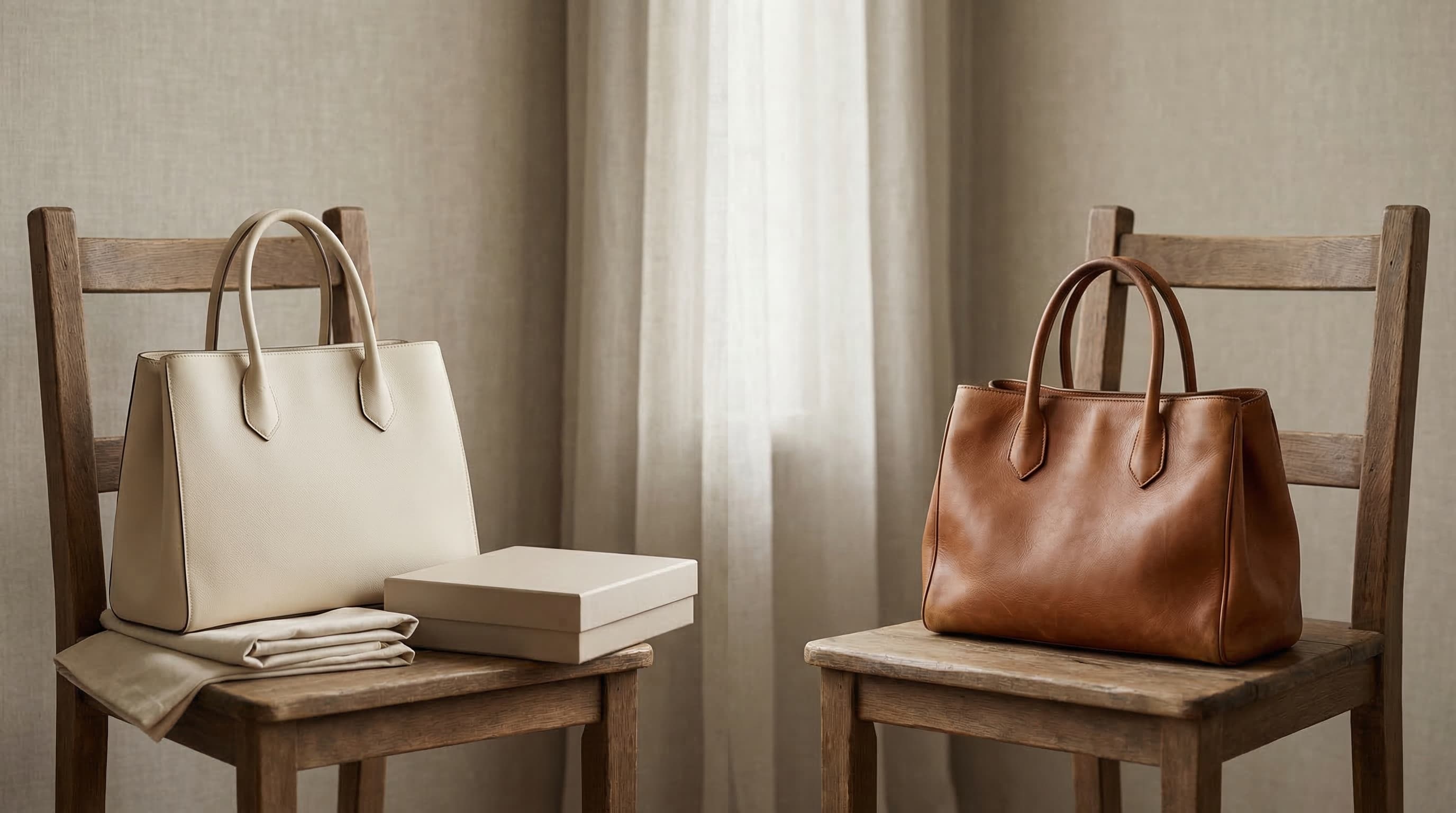
How to Authenticate a Hermes Picotin Lock Bag: 9 Checks (2026)
The Hermes Picotin Lock is the house's quietest bag doing its loudest work in resale: an unlined leather bucket with twin top handles, a cinched strap closed by a padlock, four small feet and almost no visible branding. Introduced in 2002 and named after the picotin — the measure of oats that made up a horse's daily ration, carried in a feed bag hung at the horse's head — it is the feed bucket re-cut as a city tote, and precisely because there is so little on it, counterfeiters attempt it constantly. Copies get the bucket right at listing distance. They fail where this guide looks: the exact size class claimed, the bucket's flare and rigid square base, the leather programme, the saddle stitch, the handles and cinch strap, the padlock and keys read as one set, the discreet heat stamp inside, provenance by era from the blind stamp, and the raw unlined interior with its packaging. Hermes readers should start beside our Hermes Birkin guide, Hermes Kelly guide, Hermes Constance guide and Hermes Evelyne guide: the four share the house rules on saddle stitching, heat stamps and blind stamps, while the Picotin strips away the flap, the turnlock and the lining until only leather, stitch and one small lock remain. Series context: How to Authenticate a Louis Vuitton OnTheGo Bag · How to Authenticate a Gucci Horsebit 1955 Bag · How to Authenticate a Gucci Dionysus Bag · How to Authenticate a Chanel Coco Handle Bag · How to Authenticate a Prada Re-Edition 2005 Bag · How to Authenticate a Chanel Wallet on Chain · How to Authenticate a Bottega Veneta Cassette Bag · How to Authenticate a Fendi Peekaboo Bag · How to Authenticate a Dior Book Tote · How to Authenticate a Loewe Puzzle Bag · How to Authenticate a Gucci Jackie 1961 · How to Authenticate a Saint Laurent Manhattan · How to Authenticate a Dior Lady Dior Bag · How to Authenticate a Goyard Saint Louis Tote · How to Authenticate a Celine Triomphe Bag · How to Authenticate a Bottega Veneta Jodie · How to Authenticate a Balenciaga City Bag · How to Authenticate a Fendi Baguette Bag · How to Authenticate a Cartier Love Bracelet · How to Authenticate a Prada Galleria Bag · How to Authenticate a Saint Laurent Loulou Bag · How to Authenticate a Gucci Marmont Bag · How to Authenticate a Dior Saddle Bag · How to Authenticate a Chanel Classic Flap Bag · How to Authenticate a Chanel 19 Bag · How to Authenticate a Chanel Boy Bag · How to Authenticate a Louis Vuitton Alma Bag · How to Authenticate a Louis Vuitton Neverfull Bag · How to Authenticate a Louis Vuitton Pochette Metis Bag · How to Authenticate a Louis Vuitton Speedy Bag
Short answer
A real Picotin Lock is an unlined bucket in one of four size classes — Micro 14, 18 (PM), 22 (MM) and 26 (GM) — built from a rigid square base with four protective feet, flaring gently to an open top closed only by a cinched leather strap and a padlock with keys. The leather is most often Taurillon Clemence or Epsom, stitched with the house's angled saddle stitch, and the interior is the raw reverse of the same hide. Branding is deliberately scarce: the heat stamp sits discreetly inside at the base, and the blind stamp hides on the inner leather strip by the strap's metal square or on the strap itself. Copies fail on the flare, the base, the lock's engraving and shallow stamp work long before they fail on shape alone.
1. Model, Size and Silhouette — Name the Bag First
Authenticate the claim before the object. The Picotin Lock is sold by number, and the number is a size class, not a nickname. The four current classes measure approximately: Micro Picotin 14 at 14 × 12 × 12 cm, Picotin Lock 18 (PM) at 18 × 19 × 13.5 cm, Picotin Lock 22 (MM) at 22 × 21 × 17 cm and Picotin Lock 26 (GM) at 26 × 26 × 22 cm (length × height × depth). The 18 and 22 dominate resale; the 26 is the true carryall and the Micro is a mini that holds a phone, keys and cards rather than a daily load. A listing that calls a bag "PM" but measures it at 22 cm across has failed the first check without a single stitch examined — Hermès does not mislabel its own sizes, and sellers who measure loosely usually photograph loosely too.
Measure a candidate the way the house builds it: base length across the rigid bottom, height from base to top edge at the side, and depth across the base. The Picotin's dimensions live in its square base; the soft walls above can slouch, especially in Clemence, and a slouched 18 can photograph like a 22. The base cannot lie. If the base is 18 cm and square, the bag is an 18 whatever the listing says. Older and larger discontinued classes (TPM, GM in earlier namings, and a very large TGM) circulate in vintage channels with overlapping names, so for any bag claimed as a current 18, 22 or 26, hold it to the current numbers and treat a size story that needs three paragraphs of explanation as a failed check.
2. Shape and Structure: The Bucket Flare and the Square Base
A genuine Picotin flares. From the rigid square base, the walls rise and open slightly, so the top circumference is visibly wider than the base — a bucket, not a cylinder and not a trapezoid box. The side panels pinch into soft pointed "ears" where the cinch strap draws the top together, and the bag stands on its own on a flat surface, empty, without leaning. That self-standing test is quietly decisive: the base is a separate, structured piece, reinforced so the bag keeps its footprint, and four metal feet (clous) are set into it. A copy built as a single soft tube of leather collapses inward when empty, wrinkles at the base corners, and needs to be stuffed to hold the product-photo pose.
Run a hand around the base edge. On a real bag the join between base and walls is a clean, continuous construction line with the stitching set back evenly from the edge; the corners are squared and symmetrical left to right. The feet are small, evenly domed, identical in finish to the padlock and strap hardware, and all four sit flush — rock the bag gently and it should not wobble on three feet. Feet that are plastic-feeling, unevenly set, or finished in a different tone from the lock are a structural tell, because Hermès machines and sets the full hardware set as one programme. Finally, open the top fully: the Picotin has no flap, no zip and no closure beyond the cinch — any "Picotin" with a zip top or a flap is a different bag wearing the name.
3. Leather: Clemence First, Epsom Second, Grain Always Natural
The Picotin's classic leathers are Taurillon Clemence and Epsom, with Swift, Maurice and seasonal or exotic skins appearing in smaller numbers. Clemence is the slouchy signature: a matte, pebbled bull-calf grain that feels supple and slightly heavy, softens with carry, and lets the bucket relax into its flare. Epsom is its opposite in the same silhouette — a pressed, fine-grained calfskin with a light sheen that holds the walls upright and crisp. Both are real, and neither authenticates alone; what authenticates is whether the grain behaves like a skin. Under raking light, genuine grain varies subtly across a panel — pores open and tighten, the pebble changes scale near the edges — because it is a hide, not an embossing die. Copy leather repeats: the same pebble at the same scale, corner to corner, with a plastic uniformity that reads as texture printed rather than grown.
Smell and flex support the read. Hermès leather smells of leather and waxed thread, not solvent; a strong chemical or sweet plastic smell from a "new" Picotin is disqualifying on its own. Flex a wall gently: Clemence folds softly and recovers without cracking or whitening at the fold; coated copy material creases pale and sharp. The interior is the same hide's reverse — see Check 9 — so an exterior in rich Clemence paired with a thin, papery interior in a different tone means the bag is not one skin, and a real Picotin always is. Colour names matter less than colour behaviour: Hermès dyes penetrate, so scratches read as lighter or darker leather, never as a grey film peeling to reveal plastic beneath.
4. Stitching: The Saddle Stitch, Angled and Unbroken
Hermès sews with the point sellier — the saddle stitch, worked by hand with two needles and a single waxed linen thread, each hole pre-punched with an awl so the thread sits at a consistent diagonal slant. On the Picotin the stitch lines are few and therefore exposed: around the base, up the side seams, along the handles and around the strap fittings. Every line should show the same disciplined character — stitches of even length, evenly spaced, slanting in one consistent direction, with the thread pulled to a depth that sits in the leather rather than riding on top of it. At the ends of a line, back-stitching locks the thread; you should not find loose ends, knots on the surface, or a stitch that changes slant mid-seam.
Copies usually machine-sew, and machine work reads differently: perfectly vertical stitches, identical tension that flattens the thread into the surface, and spacing that stays mechanically absolute even around curves where a hand naturally re-seats the awl. Count nothing to a magic number — Hermès does not publish a Picotin stitch count, and any guide that gives you one is inventing it. Judge rhythm instead: hold the seam at arm's length and look for a beat. Real saddle stitching has a human metronome; copies have a motor. The thread itself is linen, matte and slightly waxy, in a tone matched to the leather or a deliberate contrast on special orders — glossy polyester-bright thread is a copy trait.
5. Handles and Cinch Strap: The Carry Programme
The Picotin carries by two flat leather top handles, doubled and stitched, that rise nearly vertically from the walls and are sized to the class — short enough on the 18 for a hand or wrist carry, proportionally longer on the 22 and 26. The handles are leather all the way through their construction, with clean painted edges; bend one gently and it flexes as layered leather, with no cardboard crackle and no foam softness. Their attachments to the body are stitched panels that sit flat and symmetrical; a handle that twists, stands crooked, or is glued at a visible seam has not come from the house's bench.
The cinch is the bag's second signature: a leather strap that threads around the top and draws the walls together through a metal square fitting, closing with the padlock. The strap leather matches the body in type and colour, its edges are painted and even, and it slides with resistance — firm, not free-running. The metal square is cleanly finished, its corners true, its tone identical to the lock and feet. Strap checks catch lazy copies: a strap in a visibly different grain, edges left raw or flaking, a square fitting with casting seams or a tone that matches nothing else on the bag. The strap is also a stamp location — see Check 8 — so read it closely before you judge it merely decorative.
6. The Cadenas and Keys: One Small Padlock, Fully Engraved
On a bag with almost no hardware, the padlock carries the finest tooling Hermès puts on the Picotin, and it is where copies have the least room to hide. The cadenas face is engraved with the house name in lettering that should be cut, not cast: stroke weight even from the first letter to the last, baseline straight, each letter defined to its edges with no fading at the end of the word. Under magnification, engraved lines have clean walls; cast copy lettering goes soft, rounded and uneven, with letters that swell or thin as the mould dictates. The lock body should feel dense for its size — plated metal with weight, not a hollow shell — and its finish, palladium or gold-toned, must match the strap square and the four feet exactly.
The keys belong to the same set. A genuine Picotin's keys carry fine engraving on the bow — short, dense, uniform ribbing inside a clean border — and the number engraved on the keys corresponds to the lock they serve; lock and keys are a matched working pair, not two props in the same box. Test the mechanism: the key should enter smoothly, turn with a firm, positive action, and the shackle should open and close without grit or play. Copies fail here in small ways that add up — ribbing that is sparse or irregular, a bow border that wobbles, numbers that match nothing, a lock that feels light and rattles. Because the Picotin's leather body is plain, the lock set is the bag's jewellery; Hermès finishes it like jewellery, and anything less finished is not Hermès.
7. The Heat Stamp: Discreet, Inside, and Read at the Base
Hermès does not print its name across the Picotin's exterior. The heat stamp — "HERMÈS PARIS MADE IN FRANCE" — sits discreetly inside the bag, placed at the base of the interior, pressed into the leather in the natural finish or in a tone matched to the hardware. That discretion is itself a check: any Picotin carrying a large exterior logo stamp, a metal nameplate, or branding beyond the small lock engraving is decorated in a way the house does not decorate this bag. Find the stamp in good light inside the base and read it the way you would read an inscription: the letterforms are the house's own — clean, evenly spaced, consistently weighted — and the impression is pressed to an even depth, crisp at the edges without being cut through or blurred by a double hit.
Copies stumble on letterforms. Look for strokes that are too thick or too thin against the genuine face, letters that crowd or drift, spacing that opens mid-word, and any misspelling — a stamp that misspells the house name settles the question alone. Depth matters too: a genuine stamp is an impression, readable in raking light even where the foil or tone has worn; a printed copy stamp sits on the surface and can look suspiciously perfect in photographs while feeling flat in the hand. Judge it beside the blind stamp in Check 8: the two impressions come from the same workshop discipline, and a bag whose heat stamp is deep and crushed while its blind stamp is faint and floating is telling you its marks were applied by different hands at different standards.
8. The Blind Stamp: Provenance by Era, Read on the Strap
Every modern Picotin carries a blind stamp: a colourless impressed code combining a year letter with the craftsman's identification. On this model, look on the inner leather strip near the metal square buckle of the cinch strap, and on the strap itself — the stamp is worked into the strap area rather than the body of the bag. Read the impression before you decode it: a genuine blind stamp is shallow, with the leather's grain still readable inside every character and no crushed halo around the letters. A deep, glossy, over-pressed code with a polished ring around it is a copy trait — the stamp was hit too hard, by a die, into leather that was not worked by the hand the code claims.
Decode the year letter against the era's framing. Hermès used a single letter per year: no frame from 1945 to 1970, a circle around the letter from 1971 to 1996, and a square from 1997 to 2014; from 2015 the frames were dropped and the letter again stands alone, followed by the craftsman's marks. For the Picotin's modern era that gives, without a frame: X for 2016, A for 2017, C for 2018, D for 2019, Y for 2020, Z for 2021, U for 2022, B for 2023, W for 2024 and K for 2025. A Picotin — a 2002 design — bearing a circle-framed letter is claiming a date before the bag existed, and a code that decodes to a year letter the seller's story contradicts is a failed check however pretty the leather is. Remember the limit as firmly as the rule: a correct blind stamp is necessary, not sufficient. Counterfeiters copy codes from photographs; the stamp authenticates only when its shallow, grain-readable impression, its strap location and its decoded era all agree with the leather, stitching and lock you have already read.
9. Interior and Packaging: Raw Leather In, Herringbone Out
Open a genuine Picotin and you find no lining at all — the interior is the reverse of the same hide, a suede-like, cleanly finished raw leather in the body's own tone family. It should look like the inside of a well-made leather good, because it is one: even nap, no coating, no fabric, no synthetic smell. Some versions add small interior pockets or later variations, but the standard Lock in 18, 22 and 26 is one open compartment in raw leather. A fabric lining, a synthetic suede that dusts when rubbed, or an interior in a different colour from the exterior's reverse means the bag is built from more pieces than Hermès builds it from — and built cheaper. Check the inner base while you are inside: the heat stamp lives there (Check 7), and the construction of the base panel should match the rigid footprint you tested in Check 2.
Packaging closes the examination without deciding it. The current Hermès dust bag is a beige herringbone cotton of dense, fine weave, with the Le Duc carriage logo crisp inside its double circle and thick, durable drawstrings; pre-2007 bags arrived in orange cotton flannel or tan velour, so judge an older bag against its era. The Picotin set is the bag, its padlock and keys, dust bag and box — Hermès does not issue authenticity cards, certificates or hologram tags for this bag, and any Picotin offered with an "authenticity certificate" is being sold with paperwork the house never printed. Treat every accompaniment as supporting evidence only: genuine dust bags wrap fake bags every day, and a missing box has never made a real bag fake.
At a glance: authentic vs. fake
| Check | Authentic Picotin Lock | Common copy |
|---|---|---|
| 1. Model and size | One of Micro 14, 18 (PM), 22 (MM), 26 (GM); base measures to the claimed class | "PM/MM" naming that contradicts the measured base; size story needs excuses |
| 2. Shape and base | Rigid square base, gentle bucket flare, stands empty, four flush metal feet | Soft cylinder that collapses, wobbles on its feet, zip or flap added |
| 3. Leather | Clemence or Epsom with natural, varying grain; leather smell; one skin inside and out | Repeating embossed grain, solvent smell, pale cracking at folds |
| 4. Stitching | Hand saddle stitch, even diagonal slant, human rhythm, matte waxed linen | Vertical machine stitching, motor-even spacing, glossy thread |
| 5. Handles and strap | Flat leather handles standing vertically; matching cinch strap sliding with resistance | Twisted or glued handles, raw strap edges, mismatched square fitting |
| 6. Cadenas and keys | Cut engraving, even stroke weight, dense key-bow ribbing, matched numbers, real weight | Cast soft lettering, sparse ribbing, light rattling lock, numbers match nothing |
| 7. Heat stamp | Discreet inside at the base, even depth, correct letterforms, no exterior branding | Exterior logo stamps or plates, misspellings, printed-on flatness |
| 8. Blind stamp | Shallow strap-area impression, grain readable, era and letter agree | Deep crushed code with halo, circle-framed letter on a post-2002 bag, era contradicts story |
| 9. Interior and set | Raw reverse of the same hide, unlined; herringbone dust bag; no authenticity card exists | Fabric or synthetic lining, "certificate" or hologram paperwork, blurred logo print |
FAQ
Where is the blind stamp on a Picotin Lock? On the inner leather strip near the metal square buckle of the cinch strap, or on the strap itself. It is a shallow, colourless impression — the grain should still read inside the characters. Post-2015 stamps carry no frame; a square frame dates a stamp to 1997–2014 and a circle to 1971–1996, before this 2002 design existed.
What sizes does the Picotin Lock come in? Four current classes: Micro 14 (about 14 × 12 × 12 cm), 18 or PM (18 × 19 × 13.5 cm), 22 or MM (22 × 21 × 17 cm) and 26 or GM (26 × 26 × 22 cm). The 18 and 22 are the sizes most often listed and most often copied. Measure the rigid base, not the slouched walls, when you check a claim.
Is the Picotin Lock lined? No. The standard bag is unlined — the interior is the raw reverse of the same leather as the exterior. A fabric lining or a synthetic suede interior in a different material is a strong sign the bag is not genuine.
Does a real Picotin come with an authenticity card or certificate? No. Hermès does not issue authenticity cards, certificates or hologram tags for the Picotin. The genuine set is the bag, padlock and keys, dust bag and box. Paperwork "certificates" offered with a bag were printed by the seller, not the house.
Can a correct date stamp prove my Picotin is real? No. A blind stamp whose year letter, frame era, strap location and shallow impression all agree is a necessary checkpoint, not a verdict. Stamps are copied from photographs. The bag authenticates — or fails — as a whole: size, flare, base, leather, stitch, strap, lock, both stamps and interior read together.
Bottom line
The Picotin Lock gives an examiner very little to look at, which is exactly its protection: a genuine example is one hide of Clemence or Epsom, saddle-stitched into a flaring bucket on a rigid four-footed base, closed by a matching strap and a small, finely engraved padlock, with its two stamps pressed discreetly into strap and inner base. Work the nine checks in order, let the base settle the size, the flare settle the structure, the lock settle the metalwork, and the two stamps settle the era — and hold the whole against the asking story, never the asking price. When the leather, the stitch and the stamps tell three different stories, believe the disagreement and walk away.
Sources
Facts in this guide were checked against the following public sources:
- Sotheby's, "The Hermès Picotin: Functional and Stylish" — 2002 introduction, name from a horse's daily oat measure, feed-bag form, sizes 14/18/22/26, Clemence and Epsom, unlined interior, four protective feet: https://www.sothebys.com/en/articles/the-hermes-picotin-functional-and-stylish
- PurseBop, "Everything You Need to Know About the Hermès Picotin Lock" — 2002 introduction and name origin, unlined bucket construction, rigid base with four feet, heat stamp discreetly placed at the interior base: https://www.pursebop.com/everything-you-need-to-know-about-the-hermes-picotin-lock/
- Luxury Evermore, "Hermès Picotin Dimensions" — size table: Micro 14 at 14 × 12 × 12 cm, 18 at 18 × 19 × 13.5 cm, 22 at 22 × 21 × 17 cm, 26 at 26 × 26 × 22 cm: https://luxuryevermore.com/pages/hermes-picotin-dimensions
- LegitGrails, "Hermes Picotin Real vs Fake: Cadenas and Stamp Checks" — cadenas engraving and key-bow ribbing checkpoints, shallow blind stamp on the strap with grain readable, bucket flare silhouette, herringbone dust bag: https://legitgrails.com/blogs/hermes/real-vs-fake-hermes-picotin-lock
- Real You, "Hermès Date Stamp Guide: Year Codes & Locations" — Picotin blind stamp location on the inner leather strip near the metal square buckle: https://myrealyou.com/blogs/news/the-ultimate-guide-to-hermes-date-stamps-locations-and-year-codes-2026-updated
- LegitGrails, "Hermès Blind Stamp Checker" — year-letter table by frame: no frame, circle (1971–1996), square (1997–2014), and modern unframed sequence including Z 2021, U 2022, B 2023, W 2024, K 2025: https://legitgrails.com/pages/hermes-blind-stamp-checker
- Yoogi's Closet, "Hermes Authentication Guide & Serial Codes" — blind stamp frame eras (none 1945–1970, circle 1971–1996, square 1997 onward) and craftsman marks beside the year letter: https://www.yoogiscloset.com/authenticate/hermes
- Madison Avenue Couture, "How do I Know I'm Buying an Authentic Hermès Bag?" — lock and key numbering, dust bag history (beige herringbone since 2007, Le Duc double-circle logo): https://madisonavenuecouture.com/blogs/news/how-do-i-know-im-buying-an-authentic-hermes-bag
- L'ecrin Boutique Tokyo, Picotin Lock 18 (PM) and 22 (MM) listings — certified measurements 18 × 19 × 13.5 cm and 22 × 21 × 17 cm in Taurillon Clemence with padlock, keys, box and dust bag set: https://www.lecrin.jp/en/en-mspi2921112.html