
How to Authenticate a Celine Luggage Bag: 9 Checks

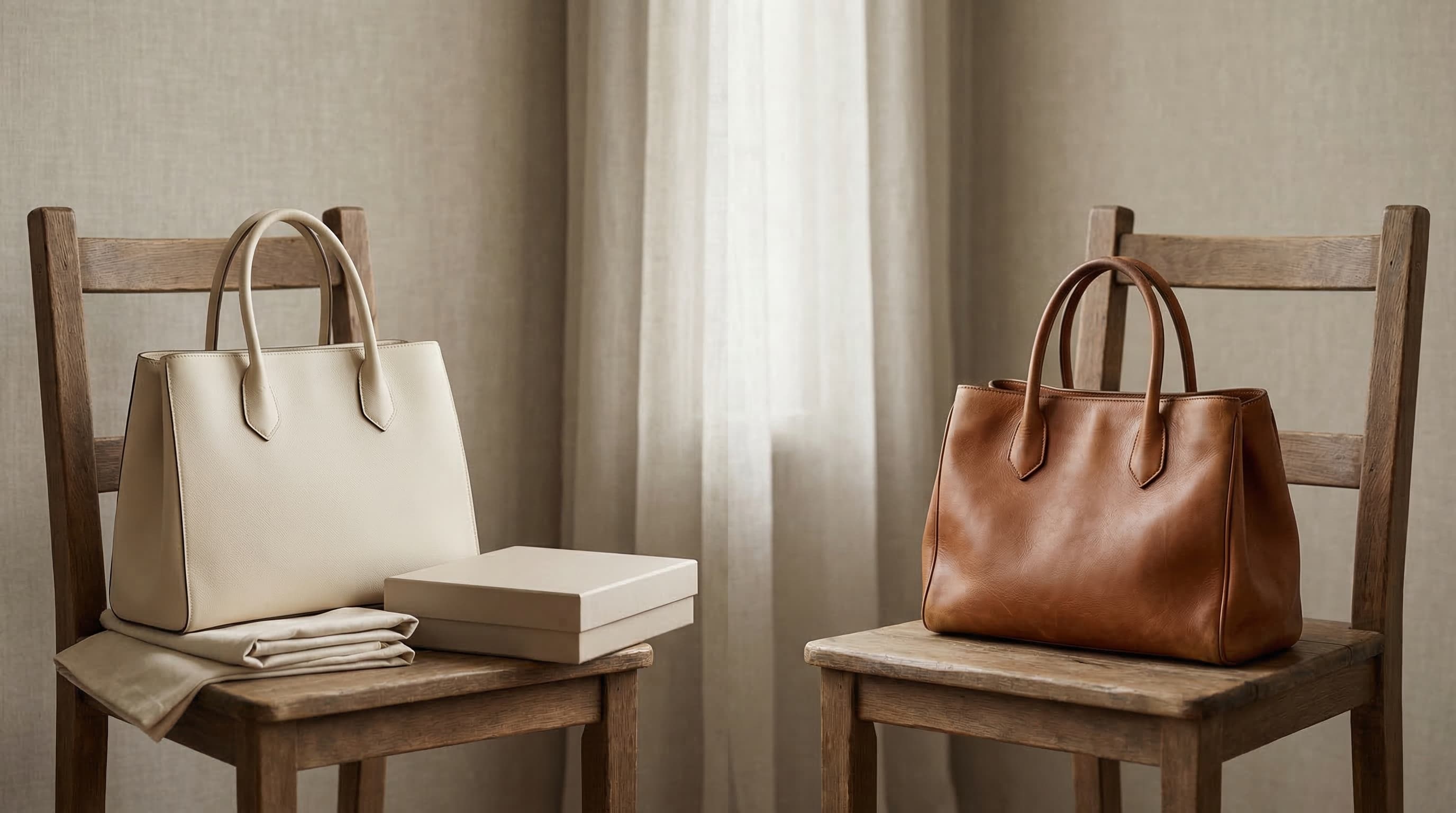
How to Authenticate a Celine Luggage Bag: 9 Checks (2026)
The Celine Luggage tote is Phoebe Philo's defining bag for the house: launched for Spring 2010 in her debut period at Celine, a structured top-handle tote whose flared side wings and horizontal front zip give the front panel its famous "face". It was an instant waitlist bag, then a decade-defining silhouette copied at every price level. Copies reproduce the winged outline in photographs. They fail on proportion, materials and era discipline: wings too wide, leather too rough or too shiny, a heat stamp in the wrong font or the wrong era's logo, and a date code that does not decode. Work the nine checks below in order — model and size, silhouette and wings, leather and lining, heat stamp, date code, stitching and handles, hardware and zipper, interior and base, and the full set — and let each one vote. Celine readers should compare the house rules here with our Celine Triomphe guide: the two bags share the stamp and date-code discipline, then diverge completely in structure. Series context: How to Authenticate a Chanel Gabrielle Bag · How to Authenticate a Hermes Picotin Lock Bag · How to Authenticate a Louis Vuitton OnTheGo Bag · How to Authenticate a Gucci Horsebit 1955 Bag · How to Authenticate a Gucci Dionysus Bag · How to Authenticate a Louis Vuitton Pochette Metis Bag · How to Authenticate a Hermes Evelyne Bag · How to Authenticate a Prada Re-Edition 2005 Bag · How to Authenticate a Louis Vuitton Alma Bag · How to Authenticate a Bottega Veneta Cassette Bag · How to Authenticate a Fendi Peekaboo Bag · How to Authenticate a Hermes Constance Bag · How to Authenticate a Dior Book Tote · How to Authenticate a Loewe Puzzle Bag · How to Authenticate a Gucci Jackie 1961 · How to Authenticate a Louis Vuitton Speedy Bag · How to Authenticate a Saint Laurent Manhattan · How to Authenticate a Chanel 19 Bag · How to Authenticate a Chanel Boy Bag · How to Authenticate a Chanel Coco Handle Bag · How to Authenticate a Chanel Wallet on Chain · How to Authenticate a Chanel Classic Flap Bag · How to Authenticate a Dior Lady Dior Bag · How to Authenticate a Hermes Kelly Bag · How to Authenticate a Goyard Saint Louis Tote · How to Authenticate a Bottega Veneta Jodie · How to Authenticate a Balenciaga City Bag · How to Authenticate a Fendi Baguette Bag · How to Authenticate a Cartier Love Bracelet · How to Authenticate a Prada Galleria Bag · How to Authenticate a Saint Laurent Loulou Bag · How to Authenticate a Gucci Marmont Bag · How to Authenticate a Dior Saddle Bag · How to Authenticate a Hermes Birkin Bag · How to Authenticate a Louis Vuitton Neverfull Bag
Short answer
A real Luggage is a structured, top-zip tote in drummed (pebbled) or smooth calfskin with proportional side wings, a front exterior zip pocket, slim equal-height top handles, and — on the Nano only — a detachable shoulder strap. The exterior carries only a heat-stamped CELINE PARIS (with the accent on the first E before Fall 2018, without it after), the interior is leather on smooth bags and micro-suede on drummed bags, and identity sits on a leather tab in the rear interior pocket in the format letter–two letters–four numbers (X-XX-####), where the first and third digits give the week and the second and fourth give the year. Hardware and zippers have a muted antique finish, zipper backs are plain and unbranded, and stitching is tight and uniform. Copies fail where the wings exaggerate, the stamp font goes oval or thin, the hardware turns brassy-shiny, or the code cannot be read as a week and year.
1. Model, Size and the Phantom Distinction — Name the Bag First
Authenticate the claim before the object. The Luggage was sold, smallest to largest, as Nano, Micro, Mini, Medium and Shoulder, with Medium and Shoulder discontinued; the Phantom is a separate, roomier sister design and its sizing does not continue the Luggage ladder. Published dimensions (height × width × depth, with some guides listing length × height × width, so record the axis order before comparing) cluster around: Nano about 20 × 20 × 10 cm (8 × 8 × 4 in), Micro about 25–27 × 25–27 × 14–15 cm (10–11 in square), Mini about 30–31 × 30–31 × 17–18 cm (12 in square class). The Phantom runs larger and wider — Medium Phantom about 30 × 28 × 23 cm and Large Phantom about 35 × 33 × 27 cm in the same guides — with an open top rather than the Luggage's zip top.
Configuration is part of the claim. The standard Luggage is a zip-top tote with a front exterior zip pocket; the Nano adds a detachable shoulder strap, while Micro and Mini are top-handle only. The Phantom, introduced a year after the Luggage in 2011, keeps the front panel language but opens at the top (with tie or hook/toggle closure in most descriptions), flares its wings wider, and carries a longer braided leather pull on the front zip where the Luggage's pull is short. A "Luggage" with an open top and braided tassel pull is describing a Phantom; a "Mini" measuring like a Nano, or a claimed size centimetres outside every published range for that name, has failed check one — and the Luggage's counterintuitive naming (Mini is the large work size, not a small bag) is exactly where listings go wrong.
2. Silhouette and Wings: Proportional, Structured, Not Costume
Read the bag standing empty. The genuine Luggage has a boat-like, structured body: the front panel is relatively flat, the side wings flare modestly and can be tucked in when less space is needed, and the bag holds its architecture without stuffing. Reference authentication comparisons are consistent on the copy tell: replicas exaggerate the wings — larger, wider and more theatrical than the original — giving the bag an odd, costume proportion, and their side ornaments are flat and poorly defined where the real bag's are finely detailed and deeply embossed.
Judge the "face" as geometry, not charm. The horizontal front zip, the handle attachments and the wing seams should sit symmetrically left to right, the top zip line straight, the base flat so the bag sits without rocking. A bag that only looks right stuffed, whose wings point at different angles, or whose front panel waves between the handles is failing structurally before any logo is read. The Phantom comparison helps here too: even the genuine Phantom's wider wings belong to a deliberately roomier, softer tote — a standard Luggage should never look that wide.
3. Leather and Lining: Drummed vs. Smooth, Matched Inside
The Luggage's core materials are drummed (grained/pebbled) calfskin and smooth calfskin, with seasonal runs in suede, textile/canvas combinations, bi- and tri-colour leather, and exotics including python. The two core leathers behave differently and both are correct: drummed calfskin is finer-grained, more forgiving of scratches and slightly softer in structure; smooth calfskin is stiffer, holds the architecture more tautly, and marks more easily. Either way the leather should feel substantial — authenticators note the line's hefty weight from its sturdy leather — with a refined grain, never rough, plasticky or coated-shiny.
The lining follows the leather, and the pairing is a check in itself: smooth calfskin Luggage totes have matching leather linings, while drummed or pebbled bags are lined in micro-suede. A smooth bag lined in loose synthetic textile, or a drummed bag whose "suede" is shiny PVC-feeling material (a discrepancy noted in a documented fake case), breaks the model's own specification. Flex and smell support the read: real calfskin folds and recovers with a leather smell; copy material creases pale, repeats its embossed grain at a die's interval, and smells of solvent. Judge the material the claim names — a "drummed" bag with a glass-smooth face, or a croc-embossed bag sold as genuine crocodile, fails on its own description.
4. Heat Stamp: CELINE PARIS, the Accent Era, and a Circular C
The Luggage carries its branding as a heat stamp, not a plaque: CELINE with PARIS beneath it, stamped on the exterior between the handles (the all-python Nano is the documented exception, with no exterior stamp), and Made in Italy inside. Two era and font disciplines decide this check. First, the accent: bags made before September/Fall 2018 carry the accent aigu over the first E (Céline); from Fall 2018 onward the accent is dropped. A pre-2018 bag without the accent, or a post-2018 bag still wearing it, is telling the wrong era story — the same old-versus-new logo discipline LegitGrails flags, where a 2018-or-later date paired with the earlier logo treatment marks the bag as fake.
Second, the letterforms. On a genuine stamp the C is circular; on fakes it goes oval and taller. The N keeps sharp ends on its diagonal where copies square them off, the E's middle bar is the shortest and its bottom bar the longest, letters are thick and solidly stamped with disciplined spacing — not thin, faint, blurry or over-spaced. The stamp colour always matches the hardware colour, and on some materials the stamp is embossed without foil. Inside, placement varies by size (on Nano totes the logo is embossed on a leather tab), and Made in Italy appears in caps; variation in placement is normal, variation in font discipline is not. Read the stamp in raking light: a genuine impression has even depth; a copy's floats on the surface or bleeds at the edges.
5. Date Code: X-XX-#### on the Interior Tab
Find the leather tab in the rear interior pocket: that is where the Luggage carries its embossed code. The format is the one constant across the model's many tab variations — one letter, a dash, two letters, a dash, four numbers (X-XX-####). The letter groups indicate the factory location; the four numbers encode the production date, read as week and year: the first and third digits give the week, the second and fourth give the year. The standard worked example in the guides is S-PA-0122, read as the second week of 2012: the first and third digits (0 and 2) give week 02, the second and fourth digits (1 and 2) give year 12.
Authenticate the decoding, not just the shape. A code whose digits cannot be read as a plausible week (01–52) and a year inside the model's production era, or whose claimed selling year fights the decoded year, fails here. Expect presentation to vary — some tabs carry one line, others two, some add Made in Italy beneath — and expect the tab's edge shape to vary too: the guides explicitly warn that both curved and straight tab edges occur on real bags, so edge shape alone convicts nobody. What must not vary is the format itself and the embossing quality: crisp, even depth, correct font. There is no public Celine code lookup, and codes repeat across bags made in the same week — a code corroborates a bag that passes the other checks; it never authenticates one that fails them.
6. Stitching and Handles: Uniform Pitch, Slim Tabs
Work the seams at reading distance. Genuine Luggage stitching is tight, straight and uniform — Extrabux cites the house standard of about eight stitches per inch, evenly arranged — with the same stitch size throughout the bag and thread colour matched to the bag. There should be no loose stitching, skipped stitches or rogue threads needing a clip. Copies show the opposite: loose, thin, uneven stitches that will open with use, and effort concentrated on the front face while wing seams and interior pocket stitching go slack.
The handles carry the same discipline in miniature. Genuine top handles are slim and equal in height, and the leather tabs anchoring them are narrow with neat, proportionate stitching — and, in side-by-side comparisons, the real tabs cover more of the handle stem, where fake tabs run wider and cover less. The handle attachment itself is pointed and well-constructed on a real bag, rounded and poorly stitched on replicas. Run both handles between finger and thumb: equal height, equal thickness, tabs mirror-imaged. Asymmetry here is construction failure, not character.
7. Hardware and Zipper: Antique Finish, Unbranded Backs
Celine hardware on the Luggage is deliberately muted: an antique, slightly tarnished finish in silver- or gold-tone, never brassy or mirror-shiny. Copies announce themselves with super-shiny hardware. Where hardware carries the Céline name (clasps and carabiner-style fittings on strapped versions), the stamping should be deep and solid with the C rounded like a circle and a thicker font; faint, thin or sparse engraving is the copy tell, as are clasp mechanics that differ in ring count and gap from the genuine construction described in the guides (real clasps use a curved ring at the base and three rings without gaps, against four separated rings on the fake in the comparison).
The zippers follow a house rule that surprises first-time authenticators: Celine does not use branded zipper backs on these bags. The backs should be plain and unmarked, the zip size often stamped on the end (the number 8 in the guides' examples), the finish antiqued to match the hardware. Teeth should be straight, evenly spaced and flawless so the slider runs smoothly; crooked, spaced-out teeth and a flat zipper outline (against the real bag's embossed definition) are copy failures. The front pocket's D-rings should be large enough to leave space on either side of the leather pull, and the pull itself separates the models: short on the Luggage, long and braided on the Phantom. Judge the pull's leather as part of this check — genuine pulls are calfskin with square, defined edges; copy pulls run rounded in rough, low-grade leather.
8. Interior and Base: Pockets, Studs and the Bottom Square
Open the zip top and read the inside as a specification. The standard Luggage interior is one main compartment with an interior zip pocket and a flat pocket against the back wall (where the date-code tab lives, Check 5); the Nano's single compartment adds its small interior pocket alongside the detachable strap configuration. Pocket stitching should match the exterior standard (Check 6), lining material should match the exterior leather per Check 3, and nothing inside should feel like an afterthought — this is a work tote, and its interior is built like one.
Turn the bag over. Micro and Mini Luggage totes stand on four protective studs; the Nano is the documented exception with no studs. LegitGrails adds a base detail worth checking on the models that carry it: a metal square at the bottom, larger and properly finished on the authentic bag, smaller on the fake in their comparison. Studs or square should be evenly set, firmly attached and finished to match the hardware's antique tone — wobbling feet, sharp mould edges or a shiny finish that fights Check 7 all vote the same way. Finally, weigh the bag empty in your hands: the genuine article's sturdy leather gives it a heft that thin copy materials do not reproduce.
9. Full Set and Packaging: Supporting Evidence, Never the Verdict
Close with what accompanies the bag, weighted correctly. The genuine dust bag is white, soft thick cotton with a printed logo and ribbon drawstring; check the logo's font, letter thickness and spacing, and the print quality — crisp with no overflow on the real bag, cheap-feeling with a floating, bleeding stamp on the fake in the guides' comparison. Care cards and receipts corroborate a story; they never create one, and genuine packaging wraps fake bags every day.
Hold the whole against the asking story, never the asking price — price appears nowhere in these checks as a criterion. The Luggage's chronology is unusually well fenced: a 2010 Philo launch, the Phantom following in 2011, the accent dropping from the stamp in Fall 2018, and size names whose meanings run opposite to intuition. Year, stamp era, size, material pairing and decoded date must all tell the same story. When they tell different stories, believe the disagreement.
At a glance: authentic vs. fake
| Check | Authentic Luggage | Common copy |
|---|---|---|
| 1. Model and size | Nano/Micro/Mini within published ranges (Nano ~20 cm, Micro ~25–27 cm, Mini ~30–31 cm); zip top, short front pull; Phantom named and built as Phantom | Size outside every range for the name; open-top Phantom sold as Luggage (or vice versa) |
| 2. Silhouette/wings | Structured boat-like body, modest proportional wings that tuck in, deep clean side ornaments | Exaggerated wide wings, flat poorly placed ornaments, only looks right stuffed |
| 3. Leather/lining | Drummed or smooth calfskin with real heft; smooth → leather lining, drummed → micro-suede | Rough or plastic-shiny leather, synthetic/PVC-feeling lining breaking the pairing rule |
| 4. Heat stamp | Circular C, sharp N diagonal, E bar discipline, stamp colour matches hardware; accent before Fall 2018, none after | Oval tall C, squared N, thin/faint/blurry stamp, wrong-era accent |
| 5. Date code | X-XX-#### tab in rear interior pocket; digits decode to a real week and in-era year (e.g. S-PA-0122 = week 2, 2012) | Wrong format, undecodable week/year, era fighting the claimed year |
| 6. Stitching/handles | Tight uniform stitching (~8/inch), colour-matched thread; slim equal handles, narrow tabs covering more of the stem | Loose thin uneven stitches, rogue threads; wide tabs, rounded poorly stitched attachments |
| 7. Hardware/zipper | Antique muted finish, deep Céline stamping; plain unbranded zip backs, size number on end, straight teeth | Brassy mirror-shiny hardware, faint engraving; branded or crooked-tooth zippers |
| 8. Interior/base | Main compartment + zip and flat pockets, matched lining; four studs on Micro/Mini (Nano none), proper bottom hardware | Slit pockets, mismatched lining, missing/wobbly studs, featherweight feel |
| 9. Set | White thick-cotton dust bag, crisp logo print, era-correct cards corroborating a passing bag | Thin dust bag with bleeding logo asked to carry a failing bag |
FAQ
Where is the date code on a Celine Luggage? On an embossed leather tab inside the rear interior pocket. The format is one letter, two letters, then four numbers separated by dashes (X-XX-####): the first and third digits give the production week, the second and fourth give the year — S-PA-0122 reads as week 2 of 2012. Tab shape and one- versus two-line presentation vary on genuine bags; the format does not.
How can I tell a Luggage from a Phantom? The Luggage is the structured zip-top tote (2010) with modest wings and a short leather pull on the front zip pocket. The Phantom (2011) is a separate, roomier design with wider flared wings, an open top with tie or toggle closure, and a long braided pull. Their size ladders do not connect — a Phantom is not the Luggage's largest size.
Why does my Luggage stamp have no accent on the E? Because of its era. Bags made before Fall 2018 stamp Céline with the accent aigu over the first E; from Fall 2018 onward the accent is dropped. Either treatment can be genuine — what matters is that the accent matches the bag's period, alongside the circular C and the rest of the stamp discipline.
Should the zipper have a brand name on it? No. On these bags the zipper backs should be plain and unmarked, with the zip size (often the number 8) stamped on the end and an antiqued finish. A prominently branded zipper back is not the house specification for the Luggage.
Which Luggage sizes have feet? Micro and Mini totes stand on four protective studs. The Nano — the only size with a detachable shoulder strap — does not have them. A studded Nano, or a Micro/Mini with no provision for studs, contradicts the model's specification.
Bottom line
The Luggage authenticates by proportion and era discipline: modest wings on a structured body, drummed or smooth calfskin paired with its correct lining, a circular-C heat stamp whose accent matches its side of Fall 2018, and a date code on the rear-pocket tab that decodes to a real week in a real year. Work the nine checks in order, let the silhouette settle the model, the stamp and code settle the chronology, and the hardware's antique finish settle the fittings — and when the wings, the leather and the numbers tell three different stories, believe the disagreement and walk away.
Sources
Facts in this guide were checked against the following public sources:
- PurseBlog, "The Ultimate Bag Guide: The Céline Luggage Tote" — 2010 Phoebe Philo debut, waitlist history, size ladder Nano/Micro/Mini with dimensions (Nano 8×8×4 in, Micro 10×10×6 in) and Phantom as separate larger formats: https://www.purseblog.com/guides/bag-guide-celine-luggage-tote/
- Rebag, "Celine 101: The Luggage & the Phantom" — Luggage introduced 2010 as Philo's first Celine It bag, Phantom following a year later with open top, adjustable wings and wider base, sizing not continuing between the two lines, Luggage sizes Nano/Micro/Mini/Medium/Shoulder with the latter two discontinued: https://www.rebag.com/thevault/celine-101-luggage-and-phantom/page/21/?et_blog
- Luxury Shops, "Your Guide to the Celine Luggage Tote" — size table (Nano 20×20×10 cm, Micro 25×25×15 cm, Mini 30×30×24 cm, Phantom Medium/Large), heat stamp accent before Fall 2018 and dropped after, circular vs. oval C, stamp colour matching hardware, date code format and S-PA-0122 worked example, plain unbranded zip backs with size number and antique finish, smooth→leather and drummed→micro-suede lining rule, clasp ring construction: https://www.luxury-shops.com/blog/the-ultimate-guide-celine-luggage-phantom-luggage-bag.html
- Extrabux, "CELINE Luggage Bag Real vs Fake Guide 2025" — Nano detachable strap vs. Micro/Mini handles only, four studs on Micro/Mini and none on Nano, grained vs. smooth calfskin behaviour, heat stamp font discipline (circular C, sharp N, E bar lengths), date code format X-XX-#### and week/year reading, about eight stitches per inch, slim handles with narrow tabs, antique rusty-toned hardware against shiny fakes, unbranded zip backs, white thick-cotton dust bag: https://www.extrabux.com/en/guide/6174744
- LegitGrails, "How To Spot Real Vs Fake Celine Luggage Bag" — boat-like shape with tuckable sides, exaggerated wings and flat ornaments on replicas, drummed calfskin standard, pointed vs. rounded handle attachments, bottom metal square sizing, tight vs. loose stitching, straight vs. crooked zip teeth, square-edged calfskin pullers vs. rounded low-grade pulls, old (2012–2018) vs. new logo era discipline, interior label construction: https://legitgrails.com/blogs/celine/real-vs-fake-celine-luggage-bag-legit-check
- JoliCloset, "Céline Luggage Bag" — Philo-era icon launched in 2010, front zip forming the face with the two side wings, size formats Nano 20×20×10 cm / Micro 27×27×14 cm / Mini 30×31×17 cm, drummed calf as the historical material with smooth calf and exotic variants, Phantom taller without the Luggage's structure: https://www.jolicloset.com/en/designers-women/celine/womens-bags/handbags/celine-luggage-nano-shopper-handbag--2041701
- A Retro Tale, "Vintage Céline Luggage Phantom Tote Bag" — Phantom open top with leather tie or hook/toggle closure against the Luggage's zip top, roomier flared-wing silhouette, front exterior zip pocket and interior pocket layout varying by period, drummed/smooth calfskin and suede material range: https://aretrotale.com/en-ca/product/celine-luggage-phantom-tote-bag-2250007266604