
How to Authenticate a Loewe Basket Bag: 9 Checks

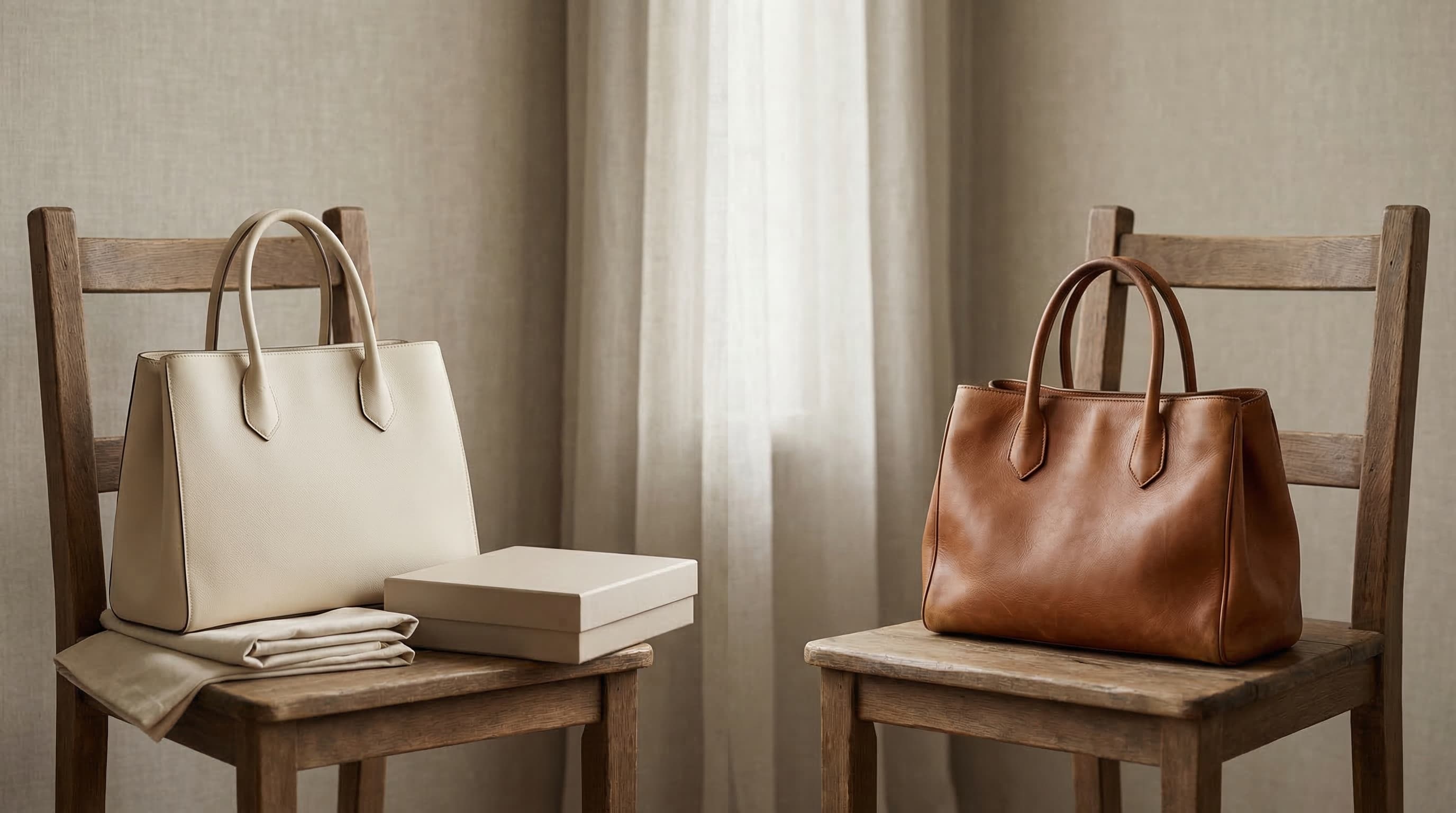
How to Authenticate a Loewe Basket Bag: 9 Checks (2026)
The Loewe Basket is authenticated the way it was made: by hand, in the open, with almost nowhere for weak work to hide. It is a handwoven palm-leaf tote — raffia or iraca palm depending on the version — finished with calfskin top handles and signed by a single calfskin patch on the front, debossed with the house Anagram. There is no flap, no frame, no chain and no large hardware logo to lean on. The body is the bag, and the body either holds a tight, even weave on a level base or it does not. The Basket grew out of Jonathan Anderson's Paula's Ibiza world, which began as a capsule in 2017, and became a summer fixture once the Anagram-patch raffia Basket broke through around the Spring/Summer 2019 season; since then the core tote has settled into Small, Medium and Large sizes, alongside Square, Paula's Ibiza and seasonal woven variants. Because the design is deliberately simple, copies survive or fail on agreement: weave spacing, handle leather, patch proportions, stitch length, stamp depth and an interior plan that stays open and unlined. Work the nine checks in order, always against the exact size and material named in the listing — a Square judged by classic-tote rules, or a Paula's colourway judged by Natural/Tan expectations, is a category error before it is an authentication — and let the checks vote together. This guide sits in our wider authentication library: Balenciaga City, Balenciaga Hourglass, Balenciaga Le Cagole, Bottega Veneta Andiamo, Bottega Veneta Cassette, Bottega Veneta Jodie, Bottega Veneta Pouch, Bottega Veneta Hop Bag, Bottega Veneta Sardine Bag, Cartier Love Bracelet, Celine Belt Bag, Celine Luggage, Celine Triomphe, Chanel 19, Chanel 2 55 Reissue, Chanel Boy Bag, Chanel Classic Flap, Chanel Coco Handle, Chanel Gabrielle, Chanel Wallet On Chain, Dior 30 Montaigne, Dior Bobby, Dior Book Tote, Dior Caro, Dior Lady Dior, Dior Saddle Bag, Fendi Baguette, Fendi First Bag, Fendi Peekaboo, Givenchy Antigona, Goyard Saint Louis, Gucci Bamboo 1947, Gucci Dionysus, Gucci Horsebit 1955, Gucci Jackie 1961, Gucci Marmont, Gucci Ophidia, Hermes Birkin, Hermes Bolide, Hermes Constance, Hermes Evelyne, Hermes Garden Party, Hermes Kelly, Hermes Lindy, Hermes Picotin Lock, Jacquemus Le Bambino, Jacquemus Le Chiquito, Loewe Basket Bag, Loewe Flamenco, Loewe Gate Bag, Loewe Hammock Bag, Loewe Puzzle Bag, Louis Vuitton Alma, Louis Vuitton Capucines, Louis Vuitton Keepall, Louis Vuitton Multi Pochette, Louis Vuitton Neverfull, Louis Vuitton Onthego, Louis Vuitton Pochette Metis, Louis Vuitton Speedy, Louis Vuitton Twist Bag, Miu Miu Wander Bag, Prada Cleo, Prada Galleria, Prada Re Edition 2005, Saint Laurent Kate, Saint Laurent Le 5 A 7, Saint Laurent Lou Camera Bag, Saint Laurent Loulou, Saint Laurent Manhattan, Saint Laurent Sac de Jour.
Quick note: no single check proves a bag is real. Weigh all nine together, and always against the exact size, weave material and handle version the bag claims to be.
Short answer
A genuine Basket belongs to Loewe and has been the house's handwoven summer tote since the late-2010s Anderson era, recognised by a palm-leaf body, adjustable calfskin top handles and a front calfskin patch debossed with the Anagram. The classic tote runs Small, Medium and Large — roughly 30–33 cm wide and 17–20 cm high for the Small, about 37–40 cm wide and 26–27 cm high for the Medium, and about 46–57 cm wide at the flare and 32–35 cm high for the Large, varying by version and by how the flared mouth is measured. The interior is open, unlined and single-compartment, the small metal and leather markings are debossed rather than printed, and Loewe offers no public serial lookup. Price is never a check.
1. Model, Era and Size Class
Fix what the bag claims to be before scoring anything else, because Basket today names nearly a decade of summer production, three core tote sizes, a Square family and a long run of Paula's Ibiza colourways, and sellers routinely list a Square or a seasonal weave under a plain classic-tote title. The era boundary needs care, because sources divide it in two. The Paula's Ibiza capsule that carries the Basket world began in 2017, and Anderson is widely credited with bringing the basket silhouette into the luxury conversation that year; the specific moment most often tied to the Anagram-patch raffia Basket is Spring/Summer 2019, when the stamped patch turned a market tote into a house icon. Read together, the honest window is late-2010s: a claimed core Anagram Basket dated well before Anderson's Paula's programme, or a woven tote whose signing is a printed logo rather than a leather patch, is background that needs evidence rather than a starting point.
Measure the empty bag standing on its base, without stuffing: height from base to rim, width across the base and then across the flared mouth, and depth at the base. The ladders only make sense once the measuring habit is named. One retail tradition quotes the body tightly — Small near 30 × 20 × 13 cm, Medium near 37 × 27 × 17 cm, Large near 46 × 34 × 21 cm — while house-retail listings that measure over the flare quote the same bags wider and deeper, Small near 33 × 17 × 13 cm, Medium near 40 × 26.5 × 16 cm and Large up to about 57 × 34.5 × 30 cm. Every figure here is approximate and varies by version: palm softens, mouths flare, and handmade bodies are never machined to the millimetre. A centimetre never decides this check. A bag sold as a Small that measures as a Large in all three dimensions, or as a Medium that cannot approach the Medium footprint, has a naming problem to resolve first.
Close with version, because the ladder does not share every detail across its life. Classic totes keep the trapezoidal flared body and twin adjustable handles; Square versions compress the footprint into a boxier city shape at roughly 26–28 cm wide and 20–21 cm high; Paula's Ibiza versions keep the construction and change colour, trim and seasonal materials, including iraca palm in place of classic palm leaf. Style numbers in the 327 family recur across genuine retail listings, but a style number is a listing aid, not an authentication: fix size class, weave material, handle system and patch first, then apply the remaining eight checks inside that format.
2. Body Material and Basket Construction
Set the empty bag down and read the body before touching the leather, because on a Basket the woven body is not decoration — it is the structure. Across the classic family the genuine body is a flared tote: narrower at a flat woven base, opening toward a wider mouth, with the weave running continuously from base to rim. The body should stand level, hold its flare without stuffing, and flex slightly against the body in carry without collapsing at the corners. Retail descriptions return to the same vocabulary — handwoven, palm leaf, open top — because it follows from how the bag is built. Copies drift predictably: a silhouette that only exists in stuffed listing photographs, a base so uneven the bag rocks on a table, or sides sewn as flat panels that meet in hard corners the woven original never has.
Then name the fibre the version claims, because Basket names several related materials and each must be judged by its own logic. The classic tote is palm leaf with calfskin trim; Paula's and later Anagram versions are also woven in raffia and in iraca palm, while Square versions add wool, cotton and reed programmes alongside palm. Palm fibre itself is prepared before weaving — cultivated, harvested and sun-dried, then handwoven by artisans, with the weaving origin varying by version (Moroccan artisan weaving with Spanish finishing is documented for Square and Paula's lines, Colombian artisan weaving for iraca versions), before leather work is completed in Spain. In hand, the genuine weave feels dry, fibrous and substantial; colour variation, tiny pills and small irregularities belong to a natural material that softens with carry. A plastic shine, a synthetic smell, or a printed straw effect on a bag claiming handwoven palm fails the agreement however neat the patch looks.
Finish with the rim and the base, because this house treats them as one woven system. The rim should finish evenly all the way around, with no sharp cut ends lifting where hands grip the mouth, and the base weave should read denser and more consistent than the walls that rise from it — the base carries the load. Authentication comparisons return to the same base point for a reason: loose, sparse or lopsided base weaving that leaves the tote unable to sit flat describes copied construction even when the front face photographs well. Honest wear is different: palm darkens where hands carry it, the flare relaxes, a strand scuffs at the base corners — but the spacing discipline survives everywhere the bag has not been repaired.
3. Handles and Anagram Patch
Find the leather work where the design puts it, because on a Basket the calfskin carries the house standard while the palm carries the shape. The classic tote carries two adjustable top handles in calfskin, fastened with cufflink-style studs — post-and-ball fittings the strap buttons over — so the same bag can be carried in the hand or over the shoulder. Handle the leather: it should feel like calfskin, substantial and slightly grained, flexing with resistance and recovering without the squeak, tack or peeling face of coated substitutes. Drops vary by size and adjustment, roughly 16 cm on the Small at its shorter settings to about 22–23 cm on larger and Square versions at theirs, so score the adjustment logic rather than a single drop number: holes or slots should be cut cleanly, studs should seat positively, and both handles should share one leather family, colour story and finish.
Read the patch next, centred on the front face where every core version puts it. The signature is a squarish calfskin patch stitched to the weave, debossed — pressed in, never surface-printed — with the four-L Anagram above or around the LOEWE wordmark. Read it straight on and then at an angle. The motif should sit symmetric, its arms balanced and its lines smooth rather than sharp, with the wordmark contained comfortably inside the patch borders instead of crowding the edges. Because the mark is pressed into leather, the grain inside the impression is compressed smooth while the surrounding texture survives; a mark that sits on top of the surface, fills with colour, or reads only in flat light is a finding, whatever the listing photographs suggest.
Close with patch agreement. Patch size must agree with the body quoting it: a small, correct patch on a Large body, or an oversized plaque swallowing a Small front, describes mismatched parts. Trim colour must agree as well — Natural/Tan pairs natural palm with tan calfskin across handles and patch, while white, black and Paula's colourways carry their own matched trim. Seasonal versions move colour and sometimes patch tone, never the discipline: one patch, centred, debossed, stitched with the short, tight work scored in Check 8. A correct patch on a bag whose weave, handles and stamps have already failed never rescues the bag.
4. Closure, Drawstring Practice and Interior
Open the bag fully and read the plan, because the Basket interior is simpler than sellers expect and copies routinely furnish it with linings the model never had. The core tote is an open-top bag: no flap, no zip and no fixed drawstring pouch closes it. Inside there is one main compartment, unlined, so the reverse of the weave itself forms the interior wall. Retail listings repeat that open, unlined, single-compartment plan across classic, Square and Paula's versions, and owner accounts confirm there are no pockets or separators dividing the space. Inventory what you find against the named version: a classic Basket claiming a sewn-in fabric lining with zip pockets, or a Small claiming divided compartments, is a point to resolve before scoring anything else.
Then handle the drawstring question directly, because listing language confuses it. The dust bag supplied with the bag can be placed inside and used as a drawstring insert, and some Paula's versions add leather tie tabs at the mouth — both are ways owners secure an open tote, and neither turns the bag into a lined drawstring design. Score what is actually present: a loose dust-bag insert that lifts out freely is period-correct owner practice; a permanently sewn drawstring lining presented as original classic-tote construction is a disagreement to resolve. Either way, the woven wall behind any insert should still read as the bag's own unlined interior, with the interior fittings in Check 6 sitting at the rim rather than on a lining that hides the construction.
Finish with carry logic. An open tote spills when tipped — that is a property of the design, not a defect to excuse or condemn — and the flare that makes the bag easy to load also means contents sit visible at the mouth. Wear should agree with that use: palm darkens at the rim where hands reach in, handles soften at the grip, and the base shows the scuffs of a bag that is set down often. Dust bag, care cards and receipts travel separately from bags and can be paired with anything; packaging supports a bag that already passes the nine checks and never carries a verdict.
5. Craftsmanship and Weave
Slow down at the weave, because this is the check the Basket lives or dies by. Count the discipline rather than admiring the front photograph. Across the genuine body the braided sections run symmetrical and evenly spaced, with minimal gaps between sections, so the walls read tight and neat from base to rim. Each strand should hold consistent width through its run, corners should turn without the pattern breaking into disorder, and the two faces should repeat the same spacing logic. Authentication comparisons return to braiding first for a reason: thin, sloppy or widely spaced braiding that lets daylight through the walls is both a visual failure and a durability one, because a loose weave carries load badly however new the bag looks.
Then separate handcraft from carelessness, because this model requires that judgement explicitly. Palm, raffia and iraca are natural fibres, and retail copy is unusually candid that handmade bodies differ slightly in size and colour from one bag to the next — no two are identical. Small colour shifts between strands, a minor pill at a friction point and a gentle relaxation of the flare after carry are the material behaving as documented. What handcraft never explains is asymmetry: one wall woven tighter than the other, spacing that opens halfway up a face, a rim that finishes at different heights, or a base pattern visibly sparser than the walls. Learn to hold both truths at once — irregularity in the fibre, regularity in the discipline — and score only the second as workmanship.
Finish with the base as weave made structural. The bottom should show a denser, more consistent pattern than the walls, woven with more material where weight concentrates, and the bag should sit flat and balanced on it. Press down gently inside the empty bag: the base should feel firm and even rather than lumpy. A body that lists to one side, or a base that rocks because one corner was woven looser than the rest, describes copied pattern work even when every visible strand on the front looks neat.
6. Labeling, Serial and Origin Agreement
Find the identification where the version puts it, because on a Loewe the markings are a system spread across leather rather than a single tag. Work in two places. Outside, the front patch scored in Check 3 carries the Anagram and wordmark. At the rim inside — and on the strap leather, depending on version — look for the smaller stamped markings: LOEWE lettering with the Made in Spain line, and on Square and Paula's versions a serial number carried on the strap itself. Placement varies by model and generation, so check the handle undersides, the rim tabs and any small interior leather tab with good light before concluding anything is missing. The stamp form is consistent: compact, evenly weighted lettering, with the origin inscription pressed deeply enough to stay legible rather than ghosting on the surface.
Read the stamps by touch as much as by eye. Loewe markings are debossed — physically pressed into calfskin — never surface-printed or painted, and a fingertip should feel the impression; authentication guidance across the house is explicit that the same discipline governs wordmark, origin line and number alike. Read the number with the same restraint. Where a Basket carries one, it follows the house pattern of a short digit string, generally six digits, pressed into its leather carrier. Public knowledge of the system is deliberately thin: the house publishes no decoding key, the middle digits are generally read as the production year, and the same number can legitimately appear on sister bags from the same year and workshop, so a repeated number is not by itself a fake signal and a unique-looking one is not proof. A shallow, surface-sitting number, a wordmark in tall thin letters that crowd their carrier, or an origin line too faint to read describes copied dies, not a copied code.
Close with the boundary every Loewe check shares. The house offers no public online verification tool or consumer authentication lookup, and any website claiming to check a Loewe serial on the house's behalf is not the house. Spain origin, debossed stamps, patch typography and number placement must describe the same bag in the same period as Checks 1 to 5; a correct-looking number on a bag whose weave, leather and stitching fail is a copied number, not a rescue.
7. Edge Finishing and Hardware
Read the leather edges next, because this house finishes calfskin as carefully as it weaves palm. Handles, patch and rim tabs should show cleanly cut, sealed edges: even in width, smooth to the fingertip, with colour holding through flex points and no raw fibre, fraying or lifting layers. General Loewe guidance returns to sealed edges as a baseline, and the Basket concentrates that test in few places, which makes each one count. Press each handle flat and turn it over: the underside should carry the same finishing standard as the face, and the stud holes should be punched cleanly on-centre rather than torn into ovals. Edge work that is rough on hidden faces while neat in listing photographs describes display finishing, not workshop finishing.
Then inventory the metal, because the Basket deliberately carries very little of it and everything present must earn its place. The core fittings are the handle studs — cufflink-style posts, with palladium- or silver-tone finishes recurring across retail listings depending on version — and, on versions that carry it, a small metal logo element at the top inside the rim, seated on a leather tab. Handle the studs: they should feel solid rather than hollow or tinny, seat the strap with a positive fit, and share one finish family across the bag. The interior metal mark, where present, should sit small and subdued on a correctly sized tab; hardware that shouts — oversized, mirror-bright, or mismatched in tone between studs and tab — is a finding. A Basket claiming zips, locks, chains or feet it never carried has a version problem to resolve first.
Close with finish survival. Honest carry marks metal and leather at predictable places: studs polish where straps move over them, handle edges darken at the grip, patch corners soften. Copies lose this check earlier, with plating that flakes at the stud posts, rough casting left at fitting edges, or leather edges that were never sealed at all. Wear that agrees with the body supports the bag; hardware that looks costume-new on a supposedly carried woven body describes substituted parts.
8. Stitching and Seams
Slow down at the stitching, because on a bag with this little leather, every row is structural and every row shows. The leather work divides into three zones, each with its own standard. Around the front patch, the stitching is short, tight and fine enough to sit almost flat against the patch border, running symmetrically without wandering toward the deboss. On the handles, the white contrast stitching runs thicker and shorter, in a boxier discipline that holds the strap layers together. At the rim and handle attachments inside the bag, the same short, thick logic secures leather to weave. Read the zones in sequence rather than sampling one corner: patch, handles and attachments should each repeat their interval consistently around their full run.
Then read the contrasts, because Basket stitching fails by zone-swapping as often as by sloppiness. Authentication comparisons agree on the pattern: patch rows that run thin and long, handle rows that run thin where they should run thick, or rim rows stretched into long tentative stitches all describe work copied from photographs rather than from the bag. The reverse trap matters too — heavy, bulky stitching where the version runs fine, subtle work, for example around belt-style handle sections — reads just as wrong. Thread should sit without fraying, loose ends or visible glue compensating for loose work; Loewe's general standard tolerates no loose threads and no adhesive shortcuts at seams. Honest wear is different: a stitch scuffs where the bag is set down, thread darkens at the grip — but the interval discipline survives everywhere the bag has not been repaired. A resecured handle end is a disclosed repair to price; stitching that was never even is a verdict.
Finish where leather meets weave, because those junctions carry the bag. Handle attachments should pull evenly against the rim on both sides, the patch should sit flat without its corners lifting from the curved front, and the woven walls should not distort around their leather fittings. A body whose front bows outward around the patch, or whose rim twists where one handle was set deeper than the other, describes copied assembly even when every individual stitch looks neat.
9. Red Flags and the Price Myth
Finish by laying the whole set out together, because a Basket is bought as a set and the set has to agree. Body, handles, patch, studs and rim markings: each piece should match the bag's size class, weave material, trim colour and generation, and each should show the same weave, leather and stitch discipline scored above. Stamp depth should hold one standard across patch, strap and origin line, and handle holes, stitch runs and edge finishing should read as the same workshop work as the patch border. Dust bag, care cards and receipts travel separately and can be paired with anything; packaging supports a bag that already passes and never carries a verdict, and a missing dust-bag insert or lost charm on a carried bag is a completeness and value point rather than proof of either authenticity or its opposite.
Confirm origin as agreement, not as a slogan. The Basket is finished in Spain — stated across house-retail listings and repeated in the stamped origin line scored in Check 6 — while its handwoven bodies originate with artisan production that varies by version. That origin line, the debossed stamps, the patch typography and the late-2010s-forward construction era must all point to the same bag. Loewe publishes no public lookup for numbers on this model, offers no consumer verification service, and no card, code or low price checkable nowhere can substitute for the nine checks agreeing in hand.
Set the finished judgement out plainly — size class and era, palm body and construction, handles and Anagram patch, open unlined interior, weave discipline, labeling and origin, edges and hardware, stitching and seams — weighed together against the exact Basket the listing claims to be, never price and never packaging. Price deserves its own sentence because this model invites the mistake at both ends: the genuine Basket sits at the accessible end of the house line and changes hands used at every level according to size, condition and completeness, while copies are routinely listed at convincing prices precisely because the silhouette looks simple. When the eight areas above describe one bag in one version, the ninth is simply the act of saying so; when they describe several, no single correct detail, however crisp, outvotes the disagreement.
At a glance: genuine vs copy
| Check | Genuine | Copy signals |
|---|---|---|
| Size & era | Late-2010s Anderson design still in line; Small ≈ 30–33 cm wide, Medium ≈ 37–40 cm, Large ≈ 46–57 cm at the flare, varies by version | Size name and measurements disagree; impossible pre-programme dating; version details borrowed from another format |
| Body & construction | Handwoven palm, raffia or iraca tote on a flat woven base; flared mouth; dry natural fibre | Stuffed-only shape, rocking uneven base, flat sewn panels, plastic shine or printed straw effect |
| Handles & patch | Adjustable calfskin handles on cufflink studs; centred calfskin patch, debossed Anagram, contained wordmark | Peeling handle substitute, off-centre patch, surface-printed mark, wordmark crowding the patch edges |
| Closure & interior | Open top, unlined, one compartment; dust bag may serve as loose drawstring insert | Sewn-in lining with invented pockets, fixed drawstring lining sold as classic construction |
| Weave | Symmetrical, tightly spaced braiding; denser consistent base; handmade colour variation | Thin widely spaced braids, daylight through walls, sparse lopsided base, one wall tighter than the other |
| Serial & origin | Debossed LOEWE / Made in Spain stamps; short pressed number where fitted; no public lookup exists | Surface-printed number, tall thin wordmark, ghosted origin line, paper identity |
| Edges & hardware | Clean sealed leather edges; solid cufflink studs in one finish family; small subdued interior metal mark | Raw fraying edges, torn stud holes, hollow studs, oversized mirror-bright metal, invented zips or locks |
| Stitching & seams | Short tight patch rows; thicker shorter handle rows; even intervals, no loose threads or glue | Zone-swapped stitch weights, thin long patch rows, fraying, glue at seams, lifting patch corners |
FAQ
When did the Loewe Basket Bag appear? The Basket world grew out of the Paula's Ibiza capsule that began in 2017 under Jonathan Anderson, and the Anagram-patch raffia Basket broke through around the Spring/Summer 2019 season. Sources divide the credit between those two moments, so the careful reading is a late-2010s Anderson-era design that has remained a summer staple since, growing into Small, Medium and Large totes plus Square and Paula's Ibiza variants.
What sizes does the Basket Bag come in, and how should I measure one? The classic tote runs Small, Medium and Large. Measure the empty, unstuffed bag on its base: height to the rim, width across the base and across the flared mouth, then base depth. Expect roughly 30–33 cm of width for the Small, 37–40 cm for the Medium and 46–57 cm across the Large flare, with heights near 17–20, 26–27 and 32–35 cm. Retail sources measure the flare differently and handmade palm varies, so judge all three dimensions against the named size rather than trusting the title alone.
Is the Loewe Basket lined, and does it close? No, in its core form. The classic, Square and Paula's Baskets are open-top and unlined, with a single main compartment formed by the reverse of the weave. Owners often drop the supplied dust bag inside as a loose drawstring insert, and some Paula's versions add leather tie tabs at the mouth, but a sewn-in fabric lining presented as original classic construction should be checked carefully against the version claimed.
Where are the markings, and can the number be looked up? Look at the front calfskin patch for the debossed Anagram and wordmark, then check the handle undersides, rim tabs and any small interior leather tab for the stamped LOEWE and Made in Spain lines; Square and Paula's versions may carry the serial number on the strap. Every genuine marking is pressed into leather, never printed on the surface. Loewe publishes no decoding key and offers no public lookup or consumer verification service, so the number only supports a bag whose other eight checks already agree.
Why does price not settle authenticity on the Basket? Price is never a check on this model: the genuine Basket is one of the house's most accessible bags and used examples change hands at every price level according to size, condition and completeness, while copies are routinely listed at convincing prices because the silhouette looks easy to imitate. The verdict is always the nine checks agreeing — size, body, handles and patch, interior, weave, labeling, edges, stitching and origin describing one bag — never the number in the listing.
Sources
- Who What Wear — Loewe's Anagram Basket Bag Is the Ultimate Summer Accessory (2017 Anderson basket moment, three sizes, iraca artisan weaving)
- Marie Claire UK — Fashion Editors Are Still Obsessed With Loewe's Basket Bag (Spring/Summer 2019 Anagram raffia breakthrough, Paula's Ibiza editions)
- PurseBlog — My Unofficial Love Letter To The Loewe Basket Bag (handwoven palm leaf, adjustable calfskin handles, embossed Anagram patch, no two bags identical)
- Selfridges — LOEWE Logo-Embossed Large Palm Leaf and Leather Basket Bag (Large 57 × 34.5 × 30 cm, open top, unlined, cufflink handles, Made in Spain)
- Liberty — Loewe Small Square Basket Bag (Square 26.4 × 21 × 10 cm, open top, unlined, debossed plaque, Made in Spain)
- Mytheresa — Loewe Large Leather-Trimmed Basket Tote (handwoven palm leaf, unlined, adjustable handles, Made in Spain)
- Natalie Yerger — Loewe Basket Bag Review (Small / Medium / Large ladder and drops, single unpocketed compartment, open-top carry behaviour)
- Via Manzoni — Medium Basket Bag in Palm Leaf and Calfskin (Medium 40 × 26.5 × 16 cm, adjustable handles, palladium-tone accents, 327-family SKU)
- Deluxe Life Collection — Loewe Paula's Ibiza Small Square Basket Bag (Morocco-to-Spain artisan route, serial on strap, dust bag as drawstring insert)
- Extrabux — Loewe Basket Bag Real vs Fake Guide (braiding density, patch and strap stamps, stitch weights, base consistency)
- Legit Check By Ch — Loewe Basket Fake Vs Real (strap and patch lettering weight, interior metal logo tab, handle and base checks)
- FashioNica — How to Tell If a Loewe Bag Is Real (debossed serial discipline, no public Loewe lookup, sealed edges, Made in Spain agreement)
Authenticate the Basket in the hand, not in the listing: stand it on its base, read the weave wall by wall, work both handles over their studs, press a fingertip into every stamp, and let size, body, patch, interior, labeling, edges and stitching describe a single bag before price is allowed to say anything at all.