How to Authenticate a Saint Laurent Rive Gauche: 9 Checks

How to Authenticate a Saint Laurent Rive Gauche: 9 Checks (2026)
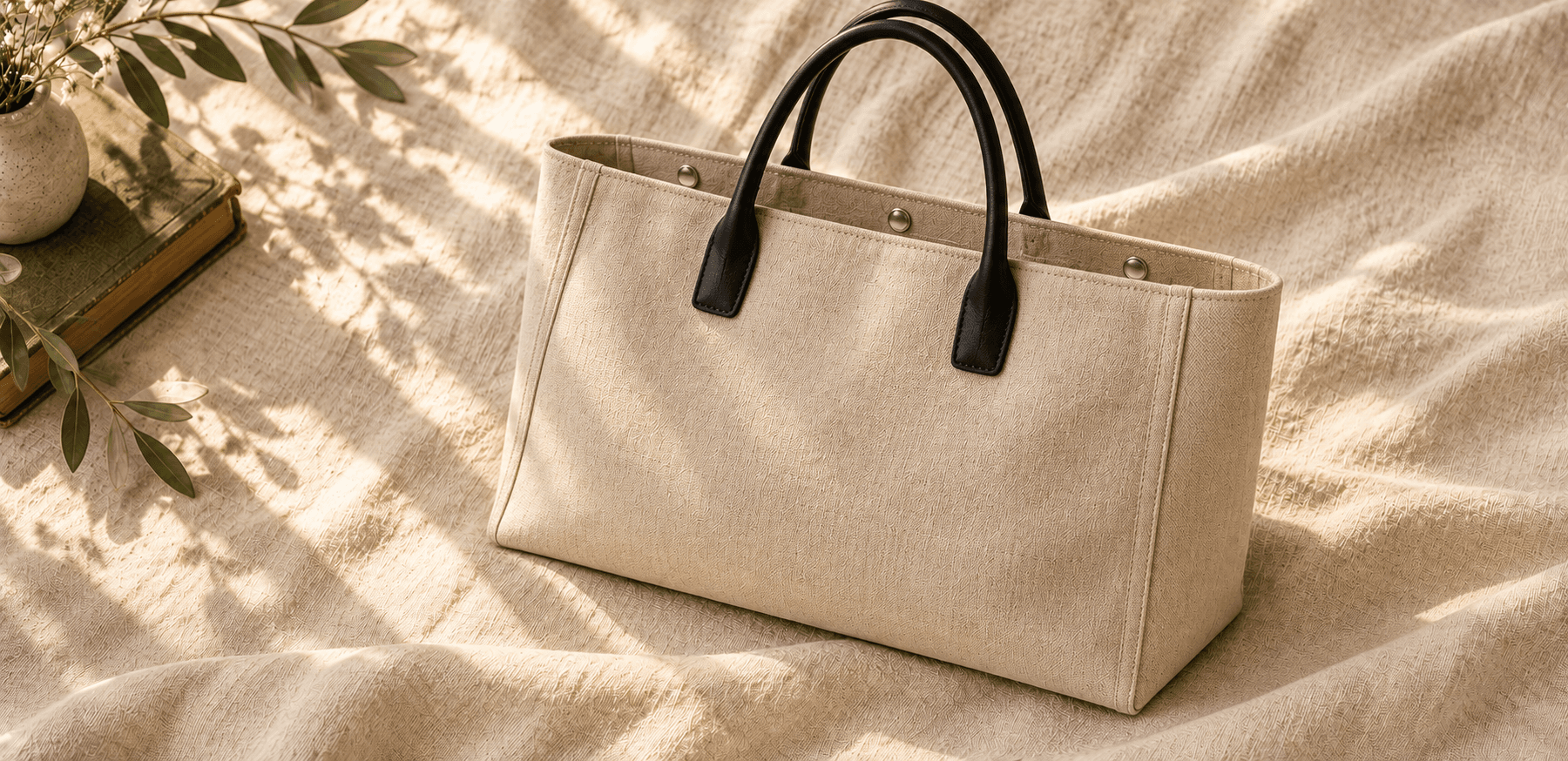
The Saint Laurent Rive Gauche tote should be read as a working shopper before it is read as a slogan. The name reaches back to 1966, when Yves Saint Laurent opened the Paris ready-to-wear boutique that put the words Rive Gauche — the Left Bank — at the centre of the house's public identity. The modern bag borrows that name for a much simpler object: a broad, open tote in canvas or linen-blend fabric, trimmed and carried in leather, with the words SAINT LAURENT RIVE GAUCHE set large across the front. That simplicity is exactly why copies get away with so much. A flat rectangle, two handles and a famous line of type look easy to reproduce, so the real work sits in the agreements — between the style reference and the measurements, between the canvas weave and the leather trim, between the snap hardware and the interior plan, and between the serial record and the version the seller says this is.
Work the nine checks in order, always against the exact version named in the listing: beige or black canvas, leather-trimmed shopper, recycled-canvas issue, or one of the raffia and vertical variants that share the name but not every specification. A centimetre never decides this bag on its own, and neither does a style number read off a tag. What decides it is whether all the parts describe the same tote. This guide sits in our wider authentication library: Balenciaga City, Bottega Veneta Cassette, Bottega Veneta Jodie, Celine Triomphe, Chanel 19, Chanel Classic Flap, Dior Book Tote, Dior Lady Dior, Dior Saddle Bag, Fendi Baguette, Fendi Peekaboo, Fendi Sunshine Shopper, Givenchy Antigona, Goyard Saint Louis, Gucci Blondie Bag, Gucci Dionysus, Gucci Jackie 1961, Gucci Marmont, Hermes Birkin, Hermes Constance, Hermes Evelyne, Hermes Kelly, Jacquemus Le Chiquito, Loewe Puzzle Bag, Louis Vuitton Alma, Louis Vuitton Neverfull, Louis Vuitton Speedy, Prada Galleria, Saint Laurent Kate, Saint Laurent Le 5 A 7, Saint Laurent Lou Camera Bag, Saint Laurent Loulou, Saint Laurent Manhattan, Saint Laurent Rive Gauche Tote, and Saint Laurent Sac de Jour. The full series index is regenerated against the live sitemap at publication.
Quick note: no single check proves a bag is real. Weigh all nine together, and always against the exact size, material and carry format the bag claims to be.
Short answer
A genuine Rive Gauche tote belongs to Saint Laurent's canvas-and-leather shopper family named for the house's 1966 Left Bank ready-to-wear story. Expect a broad open tote with two rolled or reinforced leather top handles, a centred SAINT LAURENT RIVE GAUCHE front treatment, press-stud or snap closure at the top, one main compartment with an interior zip pocket on the core versions, and Made in Italy origin. The large natural-canvas versions most often measure roughly 48 cm wide by 35 to 36 cm high by 16 to 17 cm deep, with a handle drop around 15 to 17 cm, but listings split by colour and version — a black large listing can read nearer 37 cm wide — so every figure is approximate and must be matched to the style reference, not to the word Large alone. The house publishes no public Rive Gauche serial lookup; the interior code has to agree with the bag in front of you, and price is never a check.
At a glance
- Fix the version first: canvas colour, trim, lining and style reference before any verdict.
- Large natural-canvas examples cluster around 48 × 35–36 × 16–17 cm; other versions read differently.
- Canvas should be a real woven cotton/linen body, not a printed imitation of weave.
- Front lettering must be centred, correctly spelled, cleanly made and right for the version.
- Handles, snaps and rivets should share one silver-tone hardware story and one wear story.
- The core interior is one main compartment plus a zip pocket; lining follows the version.
- Serial, origin and style reference must corroborate one another. No public lookup exists.
1. Version, Style Reference and Size Class
Fix what the bag claims to be before scoring anything else, because Rive Gauche names a family, not one immutable object. The background is consistent: the words point to the Left Bank ready-to-wear boutique opened in 1966, and modern retail descriptions repeat that origin when they introduce the tote. Treat the date as heritage, not as the tote's own launch certificate — a seller who uses 1966 to imply that a modern canvas shopper is a 1966 bag has already blurred the record.
Then fix the reference. Retail and resale listings for the core tote repeatedly show the 509415 style family, with suffixes that change by colour and material, such as 509415FAAVU and 509415FAAVR in boutique listings and 509415FAAVU9083 in a SKU-style listing. A style reference is a cross-check, not a verdict: it must agree with the canvas colour, trim, lining, dimensions and hardware of the bag being sold. A correct-looking number attached to the wrong body rescues nothing.
Measure the empty bag and say how you measured it. The natural and beige large canvas versions most often gather around 48 cm wide, 35 to 36 cm high and 16 to 17 cm deep, with handle drop roughly 15 to 17 cm. But the family does not give you one safe ruler: a black large listing is also published at about 37 cm wide by 35 cm high by 18 cm deep, and secondhand examples are sometimes recorded in a length-height-depth order that makes the same bag look different on paper. Compare width, height and depth as a set, against the named version and style reference. A centimetre never decides this check; a tote sold as the broad 48 cm canvas shopper that measures as a narrow handbag in all three dimensions has a naming problem to resolve first.
Close with variant discipline. Raffia and vertical Rive Gauche bags share the name and the front-lettering idea, but they do not import the flat canvas shopper's lining, handle or proportion tests unchanged. Judge each variant by its own published plan, and never fail a raffia bag for lacking a canvas bag's body — or pass a canvas bag because a raffia listing somewhere shares its name.
2. Open Shopper Architecture and Snap Closure
Read the architecture before touching the material, because the Rive Gauche's identity is proportional. Set the bag down empty on a flat surface and look at it as one decision. The core design presents a broad, open shopper: straight sides, a base wide enough to read as a tote rather than a pouch, an open top gathered by press-stud or snap fastening rather than closed by a zip or flap, and front lettering that sits across the face as part of the architecture. Multiple retail descriptions return to the same plan — main compartment, two top handles, press-stud fastening, interior zip pocket — because that is the issued shape of the core bag.
Work the top in each state. Open, the mouth should present as a clean, finished rim; closed on its snaps, the top should pinch together without one corner climbing, twisting or gaping. Brand-supplied retail detail for one large version describes three engraved snap buttons along the top, and other listings describe expandable sides with press fasteners, so count and place the fasteners against the named version rather than demanding one universal snap map. What must hold across versions is behaviour: snaps that seat positively, hold against a gentle tug, and release without tearing at the canvas around them.
Judge usable volume as part of architecture. A genuine large shopper should plainly swallow the load its footprint promises — folders, a sweater, a day's shopping — while the interior stays usable to the corners. Padding-choked volume, false walls, or a body so soft it collapses into a sack the moment the stuffing is removed describe a copied outline rather than this tote. The bag may soften and slouch honestly in carry; secondhand descriptions of genuine examples note exactly that. Slouch is wear. A body that will not hold any rectangular reading at all, empty or loaded, is a disagreement.
3. Canvas, Linen and Leather: Material Truth
Handle the material the version claims, because on this model the naming is half the signature. The core shopper is a woven fabric body — cotton and linen in the common natural versions, listed in compositions around 45 percent cotton and 45 percent linen with about 10 percent calf leather in trim — with leather handles and trim doing the structural work. Recycled-canvas versions are described in cotton-linen terms as well, and the palette runs from natural beige with black lettering and handles to black canvas with contrasting white lettering. Fix the exterior story first; the lining follows it in Check 6.
Score the weave with eyes and hands together. Genuine canvas shows its structure in the surface: a tight, even weave with depth, slight natural variation, and pattern continuity around corners and into the trim joins. Press a panel between flat palms and flex it gently — it should move as a substantial fabric with body, not as a thin printed sheet. The fastest tell on copies is a photograph of canvas rather than canvas itself: a flat, plasticky face where the weave is printed on, repeating too perfectly, with the grain sitting on the surface instead of running through it.
Then score the leather as leather. Handles and trim should read as smooth calfskin with a dry, fine surface: firm where they reinforce, supple where they bend, darkening honestly at grip zones. Edge paint should be even and adhered, without cracking through at the handle curves on a bag claimed to be lightly carried. Smell the bag honestly — clean fabric and leather notes on a carried example; a sharp chemical smell over a claimed cotton-linen and calfskin body is a finding. Wear must agree with the claimed life: softened corners and gentle handle darkening are consistent with a shopper that has worked; peeling faces, lifting print and colour coming away in sheets describe coating failure, not use.
4. Front Lettering: Placement, Spelling and Make
Find the branding where this design puts it: across the front face, large enough to read across a room. The words SAINT LAURENT over RIVE GAUCHE are the bag's public signature, centred on the canvas in a contrasting colour — black on the natural versions, white on the black versions. Read the lettering straight on first, then at an angle. It should sit level and centred on the face, sized to the panel without crowding the handles or the rim, with letterforms that stay consistent from first character to last.
Score the make against the version, because listings describe the front treatment in more than one way — printed lettering on the core canvas retail versions, embroidered wording in some resale and regional listings. Do not import one version's process onto another. What must agree in every version is discipline: correctly spelled words in the right order, clean edges without bleeding into the weave, even colour density, and no cracking, flaking or lifting at the letter edges on a bag whose body is claimed to be sound. A printed version whose letters sit on the surface like a transfer, already crazing at the folds, and an embroidered version with loose, wandering stitches are the same failure in two crafts.
Use the lettering as corroboration, never as the verdict. It is the most photographed square of the bag and the easiest to imitate; a correct front on a tote whose proportions, weave and interior have already failed rescues nothing. Conversely, honest fading that matches a genuinely sun-carried canvas body should be weighed as wear, not scored as a defect in isolation. The question is always whether the lettering's age agrees with the bag around it.
5. Handles, Rivets and Snap Hardware
Work the carry, because a shopper lives or fails at its handles. The core Rive Gauche carries on two rolled or reinforced leather top handles, rising from the front and back faces with a drop in the mid-teens of centimetres on the large versions. Lift the loaded bag, set it down, and lift again. The handles should hold a clean arch, meet their anchors without wobble, and share the work evenly — one handle stretching, twisting or pulling at its mount while the other stays true is a disagreement to resolve.
Inventory the anchor hardware with restraint. Retail descriptions of the natural versions call out rivet detailing at the handle attachments, and the closure snaps share the bag's metal story: silver-tone hardware is the repeated note across boutique and resale listings, with engraved snap buttons named in brand-supplied detail for at least the large canvas version. Score agreement, not brightness. Rivets and snaps should be evenly set, firmly fixed, matched in finish, and free of casting seams, pitting or sharp mould lines; engraving where the version carries it should be cleanly cut and identically spelled on every button.
Finish with wear logic, because these parts work hard. Grip zones should soften and darken consistently with the base corners and rim; bright, unworn handles over scuffed corners describe substituted parts, and one replaced snap in a different finish describes a repair that should be disclosed. Added shoulder straps, chains or charms sold as original equipment should be questioned against the named version's published carry plan — some listings describe strap-carrying variants, so check the reference before ruling either way. A correct handle pair on a failed body rescues nothing.
6. Interior Plan: One Compartment, Zip Pocket, Lining
Open the top and read the inside as a plan, because the Rive Gauche interior is deliberately plain and that plainness is a test. The core plan repeats across listings: one main compartment sized to the footprint fixed in Check 1, plus a single interior zip pocket. The compartment should be usable to its corners without false padding, and the pocket — where the version carries it — must meet the main body's standard: lining discipline matched, a zip that glides without snagging, finished surrounds.
Judge the lining by the version, because sources do not give this family one universal lining. Boutique listings record fabric lining on the natural canvas versions, brand-supplied detail names a linen lining on the large recycled-canvas version, and authenticated resale describes canvas lining on a raffia vertical variant. A generic thin synthetic lining presented as original inside a version specified with linen or fabric lining is a disagreement; the reverse — demanding linen inside a version issued with fabric — is a false alarm. Score the named version's plan, and only that plan.
Close the interior with the small disciplines. Seams should be finished without raw edges or excess material bubbling at the corners; the zip pocket should be genuinely usable, not a stitched-shut slit; the interior should smell like its materials rather than adhesive. Dust bag and packaging support a bag that already passes and never carry a verdict. An interior crowded with card-slot walls, dividers or branded prints the named version never carried describes a different bag's plan wearing this tote's name.
7. Origin, Labels and Interior Branding
Find the origin record, because this family is consistent about where it is made. Listing after listing for the core tote — boutique retail, brand-supplied resale detail and authenticated secondhand alike — records Made in Italy. An interior country marking that contradicts Italy on a core canvas version is a finding to weigh with Check 8, not a detail to excuse; either the bag is a variant whose origin is documented as such, or the record disagrees with the bag.
Read the interior branding with the same discipline as the front. Inside, this tote is restrained: the record lives on the interior tag or stamp that carries the house name and origin, set where the version places it without distorting the lining. Lettering should be cleanly made, evenly impressed or printed according to the version's method, correctly spelled and centred on its ground — never a blurred, doubled or wandering mark, and never a theatrical interior logo programme the plain shopper never carried.
Then make the label agree with everything before it. The origin, the style reference of Check 1, the materials of Check 3 and the interior plan of Check 6 should all be telling the same story about the same version. Provenance paperwork, care cards and receipts support a bag that already passes; they are dated, transferable objects and never authenticate one that does not. A beautiful card set beside a tote whose weave, snaps and serial disagree has rescued nothing.
8. Serial Number and Production Record
Find the serial where the version keeps it and read it as a record, not as a password. Authenticated resale listings for this family show an interior code built from a letter prefix, a numeric segment that can carry the style reference, and a four-digit tail — examples in current listings take forms such as a GNB prefix over the 499290 numeric family with a 0320 tail, a VLR prefix over 509415 with an 0422 tail, and a plain 499290 reading ending 0121. The four-digit tails in these examples sit naturally in the month-year pattern Saint Laurent leather goods use, but a plausible-looking tail is only the beginning of the check.
Score the record in three directions. First, format: the characters should be cleanly stamped or printed by the version's method, evenly spaced and deep enough to read without smearing — shallow, doubled or wandering characters describe a copied die. Second, agreement: where the numeric segment carries a style reference, it should match the version fixed in Check 1, and the letters and materials around it should be the ones that version issues. A 509415 reading inside a body whose measurements, lining and hardware describe a different variant is a disagreement to resolve, not a pass. Third, plausibility: the tail's date reading should sit inside the version's production life and agree with the bag's claimed history and condition — a hard-used tote carrying a record that reads as last season wants an explanation.
State the limit plainly, because sellers routinely oversell this check. Saint Laurent publishes no public serial lookup for this family, and no website can validate a Rive Gauche from its code. The serial corroborates a bag that already agrees with itself; it cannot rescue a wrong body, wrong weave or wrong interior, and a missing or unreadable record on a heavily carried bag is a finding to weigh with the other eight checks — not a verdict on its own, and never a reason to let price decide instead.
9. Stitch, Edge and Overall Finish
Finish where copies usually tire: the repetition work. Walk the bag seam by seam at reading distance. Stitching should run even and unhurried around the rim, the base and the trim joins, with consistent spacing, no skipped or doubled runs, and thread that matches its ground or contrasts only where the version contrasts it. On the canvas body, seams should not pucker the weave into waves; on the leather parts, stitches should sit in their groove without cutting the surface at the handle anchors.
Check the edges as a set. Leather trim edges should be evenly painted and adhered, canvas edges cleanly bound or finished without fraying on a bag claimed to be lightly carried, and the front lettering's panel should meet its trim without glue show or lifting corners. Hardware from Check 5 should close the same story: one finish family, one spelling, wear that matches the handles above it. The whole bag should stand, hang and open as one object — corners mirrored left to right, sides sharing a plane, the open top presenting a level rim when the snaps are released.
Close with the honesty test this family invites. A carried Rive Gauche should look carried in the places shoppers actually suffer: darkened grip zones, softened base corners, gentle slouch in the canvas, light marks that clean rather than flake. A pristine bag should look pristine everywhere at once. Mixed stories — mint hardware under worn handles, a faded front over a virgin interior, new trim on an aged body — describe parts that did not begin life together, and they are exactly what the first eight checks exist to catch. Let the checks vote together; on this tote, the verdict is the pattern, never the slogan.
Rive Gauche tote vs similar Saint Laurent totes at a glance
| Point of comparison | Rive Gauche tote (core canvas versions) | What to check instead on lookalikes |
|---|---|---|
| Front treatment | Large centred SAINT LAURENT RIVE GAUCHE lettering across the face | Small-logo shoppers should not be scored by this bag's lettering tests |
| Closure | Open top gathered by press-stud or snap fastening | A full zip or flap top names a different interior plan |
| Carry | Two rolled or reinforced leather top handles, mid-teens cm drop on large versions | Long shoulder straps belong to strap variants; match the style reference |
| Interior | One main compartment plus a zip pocket on core versions | Divided or card-slotted interiors describe another bag's plan |
| Materials | Woven cotton/linen canvas with calf-leather trim and handles | Raffia and vertical variants follow their own published specifications |
| Record | Interior serial corroborates style reference; no public lookup | A code alone, or a price, never authenticates the bag |
FAQ
Is every Rive Gauche tote the same size? No. Natural large canvas versions cluster around 48 cm wide, but a black large listing reads nearer 37 cm wide and sellers record dimensions in different orders. Match the measured triplet to the exact version and style reference; never authenticate on the word Large alone.
Should the front lettering be printed or embroidered? It depends on the version. Core canvas retail listings describe printed lettering, while some listings describe embroidered wording. Score the process the named version issues — spelling, centring, edge quality and agreement with the body — rather than one universal technique.
Where is the serial number, and can I verify it online? Resale examples show an interior code with a letter prefix, a numeric segment that can carry the style reference, and a four-digit tail. There is no public Saint Laurent lookup for this family, so the code's job is internal agreement: format, version and plausible date against the bag in hand.
What lining should a genuine Rive Gauche have? The lining follows the version — fabric on common natural canvas listings, linen named on the large recycled-canvas version, canvas on a raffia vertical example. A lining that contradicts the named version's specification is the finding; no single lining authenticates the family.
Does the dust bag or a low price change the verdict? No. Packaging and cards are transferable support for a bag that already passes, and price is never a check in either direction. The nine checks — version, architecture, materials, lettering, hardware, interior, origin, serial and finish — decide together.
Sources
- FARFETCH — Saint Laurent Large Rive Gauche Tote Bag (1966 boutique background, front print, handles, press-stud closure, zip pocket, Made in Italy): https://www.farfetch.com/shopping/men/saint-laurent-large-rive-gauche-tote-bag-item-19668183.aspx
- FARFETCH — Saint Laurent Rive Gauche Tote Bag (style 509415FAAVU, large natural measurements and composition): https://www.farfetch.com/shopping/women/saint-laurent-rive-gauche-tote-bag-item-19661410.aspx
- FARFETCH — Saint Laurent Rive Gauche Tote Bag (cotton-linen composition, 48 × 35 × 17 cm record): https://www.farfetch.com/ca/shopping/women/saint-laurent-rive-gauche-tote-bag-item-19353862.aspx
- REVERSIBLE — Saint Laurent Rive Gauche Large Tote Bag (brand-supplied detail: 48 × 36 × 16 cm, snap buttons, linen lining, Made in Italy): https://www.reversible.com/ca/shopping/men/item/saint-laurent-rive-gauche-large-tote-bag-in-canvas-and-smooth-leather-588983903
- The Corner — Saint Laurent Rive Gauche Canvas Tote Bag (SKU 509415FAAVU_9083, cotton/linen/leather composition, expandable sides): https://prod.thecorner.com/eu-en/rive-gauche-canvas-tote-bag-509415faavu_9083-p
- Cumini — Saint Laurent 509415 Rive Gauche Tote Bag (48 × 36 × 16 cm, cotton and calfskin record): https://www.cumini.com/en/products/saint-laurent-saint-laurent-509415-96n9e4164-borsa-tote-rive-gauche-br-509415-96n9e-4165
- HuntStreet — Saint Laurent Rive Gauche Tote Bag (authenticated resale: canvas, zip pocket, snap closure, Made in Italy): https://www.huntstreet.com/sell/saint-laurent-rive-gauche-tote-bag-5
- MyWellNiverse — SAINT LAURENT Rive Gauche Large Tote (resale measurements and serial form): https://mywellniverse.com/products/saint-laurent-rive-gauche-tote-bag
- Vilma's Vault — Saint Laurent Rive Gauche Neutral Canvas Tote Bag (48 × 34 × 18 cm, serial form, Made in Italy): https://vilmasvault.com/products/saint-laurent-rive-gauche-neutral-canvas-black-leather-tote-bag
- Keeks Designer Handbags — Saint Laurent Rive Gauche Tote Bag (authenticated resale: serial form, interior zip pocket): https://keeksdesignerhandbags.com/collections/saint-laurent/products/rive-gauche-tote-bag-17
- Designer Exchange — Saint Laurent Raffia Rive Gauche Vertical Tote (variant boundaries, canvas lining, serial form): https://www.designerexchange.ie/en-nl/products/saint-laurent-raffia-and-leather-rive-gauche-vertical-tote
- Clothbase — Saint Laurent Rive Gauche Tote Bag (1966 boutique background, cotton body, press studs): https://clothbase.com/items/de91c4ea_saint-laurent-rive-gauche-tote-bag
From the UOOTD store
Explore tote bags
Prices in USD. Details and availability in the store.
About the Author